

If you've ever heard about a new medicine or vaccine being tested before it reaches hospitals and pharmacies, you've already come across the concept of clinical trials. But what exactly are clinical trials? And how do they work in India?
A clinical trial is a kind of research study that involves real people. It’s done to test whether a new treatment like a medicine, vaccine, or medical device is safe and effective. Before any treatment becomes available to the public, it must go through several stages of testing. These trials help doctors and scientists make sure that what they are giving to patients will actually work, and won’t cause serious harm.
In India, clinical trials are becoming more common and important. Given the country’s large and diverse population and unique genetic phenotype, India plays a major role in global medical research. Many international and Indian pharmaceutical companies, hospitals, and research institutions conduct trials here. India’s experience in medical care, combined with improvements in regulation and ethical oversight, makes it an ideal place for conducting such studies.
How do clinical trials work?
Every new treatment goes through different phases. In the beginning, the treatment is tested in laboratories and on animals. If it looks promising, it moves to human trials. Human trials are done in phases—starting with a small group of people to check safety, and then expanding to larger groups to test how well the treatment works. Finally, if all goes well, the treatment may be approved for public use.
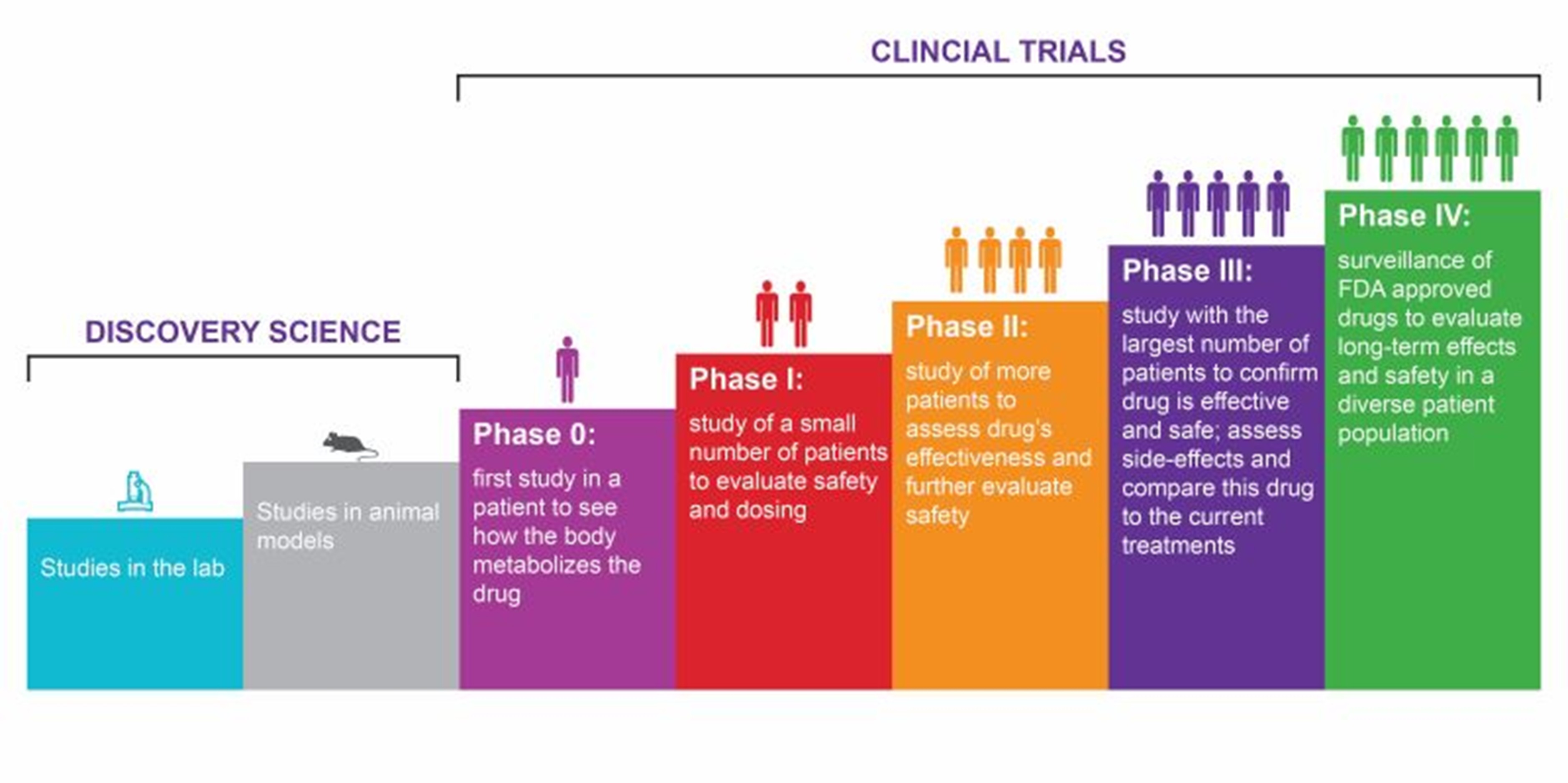 Image sourced from: https://www.imperialcrs.com/blog/clinical-trial-writing-and-design/drug…
What are the steps of a clinical trial?
People who join these studies are called “participants” or “volunteers.” (Note: It is not appropriate to call them subjects anymore). Sometimes, these are healthy individuals, and sometimes they are patients who already have a specific illness. Before anyone joins a clinical trial, they must an “informed consent.” This means the study is clearly explained to them—what it is about, what the risks and benefits are, and what will happen during the trial. They can then choose whether or not to participate. No one can be forced to join, and participants can leave the trial at any time.
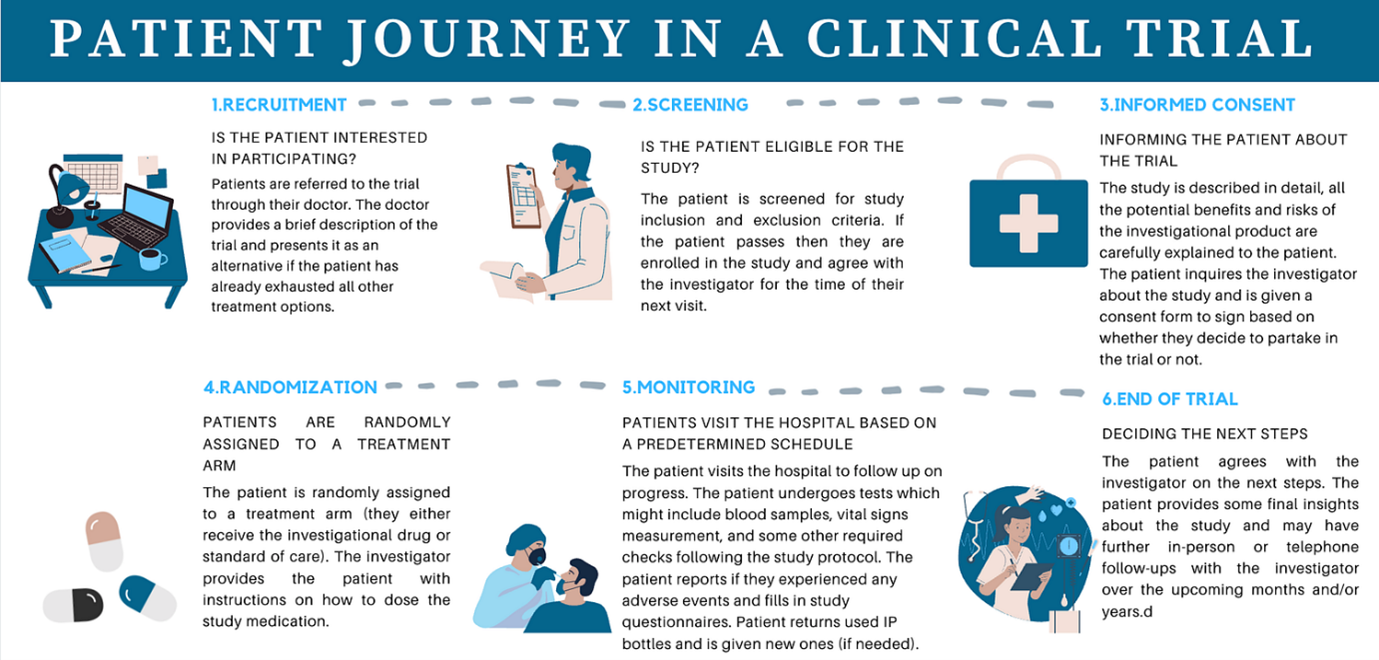 Image sourced from: https://medium.com/@iman.sayed29/ux-case-study-my-concept-for-a-clinica…
Is it safe to be part of a clinical trial?
That’s a very important question. In the past, there were concerns about the safety and ethics of some trials. But things have changed significantly in recent years. The Government of India, through the Central Drugs Standard Control Organization (CDSCO), now strictly regulates clinical trials. There are guidelines to protect participants, ethics committees that review all trial plans, and rules that ensure that anyone harmed in a trial is compensated fairly.
Participants in a clinical trial are monitored very closely, especially for serious and severe adverse effects. If participants experience these adverse effects, the doctors and research team step in immediately. In fact, many people who take part in trials say they receive even more attention and medical care than usual because everything is so closely watched.
Why do people participate in a clinical trial?
There are many reasons why people choose to join clinical trials. Some do it because they want access to the latest treatments that are not yet available as routine treatment. Others do it to help advance science, especially in cases where current treatments are not working well. Many patients with cancer or rare diseases choose to participate in trials in the hope of finding a better solution. And some volunteers especially in early-phase trials are healthy people who take part to support research, often with some financial compensation.
Joining a clinical trial is a personal decision, and it is important to talk to your doctor or family before deciding. Not every trial is right for everyone. India is also making progress in making trials more transparent and accessible. All clinical trials must be registered with the Clinical Trials Registry - India (CTRI), which is publicly available online. This means anyone can check what trials are being done, where, and for what purpose. This helps build trust and gives patients more information.
One of the biggest lessons from the COVID-19 pandemic was how important clinical trials are. Vaccines that now protect millions were first tested in trials around the world including India. Indian companies conducted large trials in the country, and thousands of volunteers came forward to help. Their contribution saved countless lives.
What is the importance of clinical research?
As we move forward, clinical trials will continue to play a key role in improving healthcare. They are essential for finding better ways to treat diseases like cancer, diabetes, tuberculosis, and many others. India, with its talented scientists, committed doctors, and diverse population, has the potential to become a leader in medical research.
If you ever hear about a clinical trial and wonder if it is something you or someone you love should consider, remember that it is not just about taking a new drug—it is about being part of a process that could help improve lives for generations to come. Ask questions, gather information, and make a choice that feels right for you.
Clinical trials, when done ethically and responsibly, are not just about science—they are about people. And in India, that human side is becoming more important than ever before.
This is the first in a series of articles on Clinical Trials. If you have a question or have something to share please write to us at https://www.patientsengage.com/contact