

Aishwarya Nitin Bhalerao, 26 from Mumbai was diagnosed with Sickle Cell Thalassemia at the age of 2, and has learnt to live with it, the hard way. An achiever, she is positive in spirit and fights the condition on a daily basis.
When were you diagnosed? How did the diagnosis come about? Initial signs/symptoms? What tests were done at the time? What is your family history of Sickle Cell?
I was diagnosed with Sickle cell beta thalassemia at the age of two. It all started with a simple fever. One day all of a sudden I got fever. Initially, my mother, thinking it to be normal fever, gave me some basic syrup. There was no improvement and within 2/3 days my legs and hands had swollen up. I was taken to the hospital. The doctor advised a CBC (Complete Blood Count) test, in which my hemoglobin was found to be 4.2. The doctor knew something was wrong, and I was put through more tests. The Haemoglobin Electrophoresis test showed that I was positive for Thalassemia. The doctor advised my parents to visit a haematologist in Mumbai. The doctor in Mumbai ran some more tests like Haemoglobin S (HbS) test, HLA Test, HPLC Test, and they also tested my parents and elder sister as well. My father was diagnosed with Thalassemia Trait and my mother with a Sickle Cell Trait, and I was diagnosed with Sickle Cell(S) Beta Thalassemia. My parents, till then, had no clue about bearing the traits. This was the beginning of my journey.
What treatment are you on? What pills including supplements do you take daily?
As a Sickle Cell Thalassemia warrior, I follow a disciplined medical regimen to keep my 'engine' running and my creativity flowing. My daily routine includes two 500 mg Hydroxyurea pills to stabilize my counts, along with Folic Acid and Aspririn 75 mg. Iron management is a critical part of my journey, I also take two 500 mg Deferasirox pills daily to stabilize my iron levels. When a crisis occurs or my hemoglobin drops, I rely on blood transfusions to regain my strength and get my life back on track. To ensure that I can lead a normal life, I receive Inj. Zoledronate 2mg (IV) every six months, specifically for my bone health, supplemented by other essentials like vitamin C, B12 and calcium. It isn’t always easy, but this structured care is what allows me to balance my professional goals with my health, proving that a diagnosis doesn't have to define my potential.
What does a typical day of living with sickle cell disease look like?
Living with Sickle Cell means being kind to my body every day and planning ahead.
I hold a Master’s Degree in Applied Arts and currently I run a Design Art Studio in Mumbai. For the last nine years I am living alone in Mumbai, though my parents visit me often from Nashik, my hometown. Living alone has taught me many things, and the most important is pain management.
My morning always starts with my iron medicines and a solid breakfast. I’ve made it a rule for myself: I don't step out of the house until I’ve had both.
A good breakfast for me is an egg and dry fruits, and the rest keeps changing like poha, different types of dosa like moong dosa, rava dosa or idli, etc. My doctor says water intake is a must for people with sickle cell condition. So I also try to have juices or fruits everyday. My mother makes ladoos for me depending on the weather like dry fruit ladoos in winter and peanuts in summer which I can carry with me as snacks.
I never leave home empty-handed either. I always carry my water and my supplements with me wherever I go. Through the day, I have to be very careful and "calculate" my steps. I make sure to eat on time and take my pills right when I need them so I don’t push myself too hard.
By the middle of the day, usually around noon, I start to feel the fatigue kicking in. My body tells me it’s time for a nap. If I’m in a spot where I can’t lie down, I just choose to work a little more slowly. By taking it easy and pacing myself, I can save enough energy to keep going till the end of day.
Is there any food that you avoid or advised to have more of? What are usually your pain triggers?
As I also take medication for iron, I try not to eat meat and food products containing iron if the Serum Ferritin goes beyond 1500. The Serum Ferritin is a test which measures the amount of the protein ferritin in your blood, which directly reflects your body’s total iron stores. But if the Serum Ferritin is lower than 1500, I eat meat and soups. And even green leafy vegetables. Sometimes fried food can trigger crisis. I also love to eat spicy food, but sometimes even that triggers pain. So according to my health condition, I decide what to eat. For instance, there are days when I’m doing great. That’s the day I have my cheat day of eating outside food. My most common pain triggers are exertion, dehydration, weather change and stress.
What are some of the biggest challenges you face on a regular basis?
One of the biggest challenges I face daily is actually something regarding as simple as my bag. Because I have to carry my water, all my medicines, and other essentials to stay safe, my bag gets very heavy. For me, just carrying that weight around while I’m out is a real struggle and wears me out quickly. Another thing that’s always on my mind is the fear of facing a crisis in public. It’s happened to me before while I was out or at work, and it’s a scary experience. Most people around me don’t know what’s happening or how to help, and when I’m in that much pain, I’m usually not in a state to explain what I need. I fear that vulnerability in myself and the helplessness.
Lastly, there’s the constant fatigue. It feels like after every little activity, I’m just exhausted. Even small things that might seem easy to others take a lot out of me, so I’m constantly managing my energy levels, just to get through a day.
How do pain episodes (crises) affect your routine, work, or studies?
A single crisis usually takes me about 10 to 15 days or a month sometimes to fully recover. Whether it was back in my school days, college, or now with my current work, those days away from work or studies meant I was always falling behind. While everyone else was moving forward, I was stuck in a hospital bed or at home, when even "working from home" isn't an option. In those moments, you can’t study or be productive. You just have to survive the pain and take rest.
Every time I finally get back to my desk or my projects, it feels like I’m starting from scratch. That "reset" is one of the biggest challenges I face, especially when I’ve made commitments and a sudden crisis pulls me away. But there is a flip side to this struggle. Because I’ve spent my whole life catching up, I’ve actually developed a bit of a superpower: I’ve learned how to do 15 days of work in just 4 or 5 days. When I’m healthy and back on my feet, I work with a different kind of intensity day and night, whatever it takes to bridge the gap. It’s both a disadvantage and strength at the same time. The pressure to cope and stay at the same level as everyone else is exhausting, but it has taught me a level of efficiency and resilience that most people never have to learn. I might have to restart often, but I’ve learned how to run faster once I get going.
Has sickle cell disease influenced your education or career?
Sickle Cell has influenced almost every choice I’ve made in my education and my career. Growing up, it was really tough because I was constantly falling behind in school and college. While my friends were moving forward, I was often stuck at home or in the hospital.
One of the hardest parts wasn't just the physical pain, but the struggle to make people understand. Not every teacher or professor was helpful. Because I looked "fine" on the outside, some felt my condition was just an excuse to miss classes. This was so hurtful since I was actually struggling to survive. Even with friends, I felt that not everyone looked at me the same way anymore. It was lonely having to constantly explain myself to people who didn't want to see the reality. But those experiences actually led me to my path today. I realized I needed a career where I could have more control over my time and my environment. I needed to do something where I could be my own boss and work at my own pace.
How has living with sickle cell disease impacted your mental or emotional health?
This is my favourite question because I’ve worked so hard on my mental health over the years. When you are physically hurting that badly, your mind starts to race. You find yourself asking, 'Why me?' or 'When will this ever stop?' In those moments, pulling yourself together is the hardest thing anyone could ever imagine.
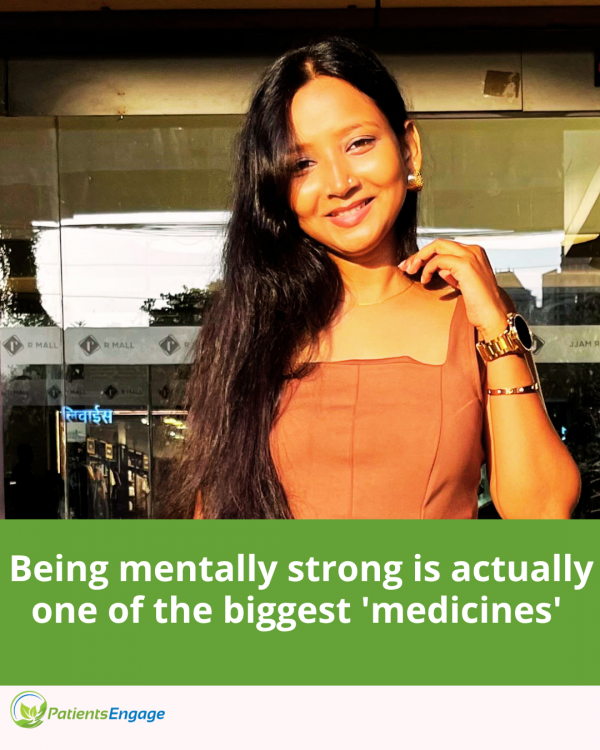
I’ve learned that being mentally strong is actually one of the biggest 'medicines' that helps me fight Sickle Cell. My parents have been my biggest support here; they always remind me that no matter how bad the crisis is, it’s just a matter of time before I’ll be back on my feet again. That emotional strength they’ve given me is what keeps me going. But I’ll be honest it isn't always easy or positive. There are days when I feel so emotionally drained that I just want to give up. Sometimes I don’t want to be a 'warrior'; I just want to exist and do nothing at all. The pain makes me irritable, angry and annoyed, and it’s really difficult to keep those emotions in check. I’ve realized that you can't always deal with it in a positive way, and that’s okay. But at the end of the day, I still believe that keeping your emotional health stable is the best way to deal with any diagnosis.
What coping strategies or support systems have helped you the most?
Without a doubt, my parents are my biggest and most important support system. The best thing they ever did for me was treating me like any other child. They never made me feel "special" or different in a way that held me back. Instead, they always taught me that Sickle Cell is just one part of me, it’s not my whole identity. Because of them, I grew up doing everything other kids did. They taught me that I can’t run away from the reality of my condition, so I have to live with it, face it, and keep moving forward in a positive way. When it comes to my daily strategy, I’ve found that being disciplined is what works best. Taking my medicines on time and never missing a checkup helps me keep a close track of how my body is doing.
But most importantly, I have learned to "study" my body. I’ve realized that my body is actually very smart. It always gives me little hints or signals before the onset of a major crisis. By learning to read those hints and knowing exactly what my body needs in those moments, I can manage my health much better. It's all about knowing yourself and what works specifically for you.
Have you encountered stigma or misunderstandings from others?
Yes, I’ve definitely faced my share of stigma and misunderstandings. When I was younger, and even in design school, some parents actually thought Sickle Cell was contagious. They would tell their children to stay away from me because they were afraid they would "catch it" from me. It was so hurtful to be treated like I was a danger to others just because of a condition I was born with. Then there was the struggle with professors. Many of them just saw me as "lazy." Because they couldn't see the pain, they thought I was making up excuses to avoid school or to get out of finishing my projects on time. They didn't realize that I wasn't trying to escape my work—I was just genuinely exhausted or in pain and trying my best to keep up.
Even now, people often downplay what I’m going through. They think it’s just a "basic" blood disorder and that if I take my medicines, I’m perfectly fine. They don’t understand what a "crisis" actually feels like or how much it takes out of you. Because I look normal on the outside, they don't realize the massive battle that I'm actually fighting on a daily basis.
How has the condition affected your relationships with family, friends, or partners?
Family: My Core Strength-Living with Sickle Cell has made the bond with my parents incredibly strong. Every year, my love and respect for them only grow deeper. They stand by me in a way nobody else can, and they truly understand what I’m going through without me even having to say a word. They are my constant support, and I honestly don't know what I would do without them. With my extended family, it’s a bit different. Many of them don’t quite grasp what the condition actually is. Whenever we meet at functions, the conversation is always about me being "sick." I often get hundreds of suggestions and pieces of advice from different relatives most of which don't really apply to what I’m actually facing. It can be exhausting to deal with that lack of understanding.
Friends: Quality Over Quantity- My friendships have also seen a lot of ups and downs. In the past, not everyone was supportive. Some people actually avoided being close to me because they were scared; they didn't want the "responsibility" if I had a sudden crisis while we were hanging out. It was hard to realize that some friends were pulling away because they didn't want to learn how to deal with my health. However, this journey has helped me find my true circle. I have two or three very close friends who have been through the most difficult times with me. They didn't run away. Instead, they learned how to be supportive. They know exactly what to do when I'm in a crisis, they know my medicines, and they are always there for me. It taught me that having a few people who truly "get it" is much more valuable than having a large group of friends who don't.
What advice would you give to others with Sickle cell?
Walk Your Own Path
The most important thing I’ve learned is that you have to learn to walk alone. This is your personal journey, and you are the only one who truly knows what your body is going through. My biggest piece of advice is to stop comparing your pace with others. If someone without Sickle Cell can walk 100 steps a day, don’t feel pressured to do the same. Learn how your own body reacts. If you are able to walk 70 steps today, so be it. If on another day, you can manage only 10 steps, those 10 steps are important too. The key is to keep moving instead of staying at home and feeling defeated. Every day is different. One day you might feel like you can take on the world, and the next, you might not be in a condition to walk at all. That’s okay. Learn to listen to your body and react to what it needs in that moment.
Finally, try to never say "no" to life. I’ve kept going and had a wonderful life because I try everything - every task, every activity, every new experience. Don’t worry about the outcome or worry if things will go well or not. Just the act of trying is what matters. Remember, a crisis is just a phase. It’s a moment that will pass. As long as you continue your medication and manage to be mobile, no diagnosis can stop you from having a beautiful life.
As told to Moyna Sen