  • Chronic Kidney Disease
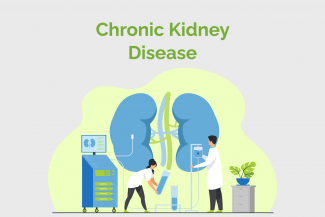
    Chronic kidney disease (CKD) is a worldwide public health problem.  lthough the exact reasons for the growth of CKD are unknown, changes in the demographics of the population, differences in disease burden among racial groups, and under-recognition of earlier stages of CKD and of risk factors for CKD may partially explain this growth It is also known as Chronic Renal Disease. 
Submitted by PatientsEngage on 27 January 2016
CKD Prevention

Can Chronic Kidney Disease (CKD) be prevented:

The following may reduce your risk of developing or worsening CKD:

  • Stop smoking and drinking alcohol
  • Eat a balanced diet – avoid eating high cholesterol foods
  • Exercise regularly
  • Avoid usage of unprescribed medicine e.g. NSAIDs (pain killers) and abuse of antibiotics
  • Manage your diabetes well
  • Control your blood pressure
Changed
30/Mar/2025

Stories

  • Coming Full Circle
    Like any young woman, Choo Peck See, 45, had dreamed of meeting the right person someday, settling down and starting a family of her own.  It was a dream come true when she was called up to receive a kidney transplant and have a shot at a normal life. But life had other plans. Read on: Bittersweet Sixteen Mere months after completing her O-Levels and still finding her bearings in the aftermath of her mother's sudden stroke, Peck See herself showed symptoms of kidney failure. The poor…
  • Asian children are more prone to developing kidney diseases
    Today is World Kidney Day and the theme this year is ‘Kidney Disease & Children – Act Early to Prevent it’. We spoke to Dr Pankaj Deshpande, pediatric nephrologist, to apprise us about kidney disorders in children and how they can be alleviated. What are some of the common kidney diseases/disorders in children? How does it affect them? There are many kidney illnesses in children and that actually evokes surprise in a lot of people as they are quite unaware that kidney…
  • CKD Management
    Chronic Kidney Disease Management
    Managing Chronic Kidney Disease Chronic kidney disease brings a markedly increased risk of cardiovascular disease, which is a more common cause of death in these patients than renal failure. These patients often have other risk factors for heart disease, such as hyperlipidemia (increased lipid levels in blood).  Kidney Friendly Diet A healthy diet can help slow the progression of CKD, control blood pressure, reduce swelling, and support your overall health. Your diet should be tailored to…
  • CKD Prevention
    Chronic Kidney Disease Prevention
    Can Chronic Kidney Disease (CKD) be prevented: The following may reduce your risk of developing or worsening CKD: Stop smoking and drinking alcohol Eat a balanced diet – avoid eating high cholesterol foods Exercise regularly Avoid usage of unprescribed medicine e.g. NSAIDs (pain killers) and abuse of antibiotics Manage your diabetes well Control your blood pressure
  • CKD Stages Complications
    Stages and Complications of Chronic Kidney Disease
    Different stages of Chronic Kidney Disease(CKD) Stage 1: The eGFR (estimated GFR) shows normal kidney function but you have some pre-existing kidney damage or disease. eGFR is 90 or more ml/min/1.73m2. This is the first stage of CKD.  Stage 2: Mildly reduced kidney function and you are already known to have some kidney damage or disease with  eGFR between 60 to 89 ml/min/1.73m2 Stage 3: Moderately reduced kidney function (with or without a known kidney disease. For example, an elderly…
  • CKD Causes and Risks
    Causes of Chronic Kidney Disease and Risk Factors
    What causes Chronic Kidney Disease (CKD) Diabetes mellitus (an increase in blood sugar level) raises the risk of developing CKD.  Hypertension (high blood pressure), if poorly controlled, can lead to CKD. CKD can also cause high blood pressure. Diabetes and hypertension together are responsible for two-thirds of cases of CKD. Glomerulonephritis, a group of diseases that cause inflammation and damage to the kidney's filtering units. These disorders are the third most common type of kidney…
  • CKD Tests Diagnosis
    Chronic Kidney Disease Tests
    Tests for Chronic kidney disease Doctors use the CGA system to understand how severe CKD is and to decide the best treatment. It looks at three things: C – Cause: What is causing the kidney disease (for example, diabetes or high blood pressure)? G – GFR (Glomerular Filtration Rate): A blood test that shows how well your kidneys are filtering waste from your blood. A normal GFR is usually 90 or higher, although it naturally decreases with age. A – Albuminuria: A urine test that checks whether…
  • CKD Chronic Kidney Disease Treatments
    Treatment for Chronic Kidney Disease
    Your doctor may suggest the following treatments for CKD: Treatment for CKD depends on the cause, stage, and severity of the disease. The goals are to slow kidney damage, manage symptoms, prevent complications, and reduce the risk of heart disease and kidney failure. The Four Pillars of CKD Treatment The latest KDIGO (Kidney Disease: Improving Global Outcomes) guidelines recommend a "Four Pillars of Therapy" approach. Unlike the past, when treatment focused mainly on controlling blood pressure…
  • CKD Symptoms Signs
    Chronic Kidney Disease Symptoms
    Symptoms of Chronic Kidney Disease Initially there are no specific symptoms and Chronic Kidney Disease is generally only detected as an increase in serum creatinine or protein in the urine. As kidney function decreases, you may have the following symptoms of CKD: Feel more tired and have less energy Have trouble concentrating Have poor appetite Have trouble sleeping Have muscle cramping at night Have swollen feet and ankles Have puffiness around your eyes, especially in the morning Have dry,…
  • Kidney Donation and Gender Disparity
    A widely prevalent skew in kidney donation — gender disparity — is just as shocking as economic disparity, when the bald numbers are scanned. Doctors at Narayana Health, a large Bangalore-headquartered hospital chain run by well-known cardiac surgeon Devi Shetty, found that an overwhelming 65 per cent of kidney donors in its hospitals are women, whereas 70 per cent of kidney recipients are male. Kidney donation is a medically proven safe process that has no bearing on a person’s lifespan. Yet,…