Submitted by Dr S. Patel on 7 August 2017
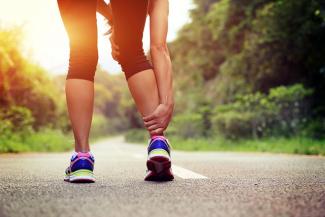
A woman outdoors in tights and running shoes holding her calf

Do you sometimes get sudden cramps in your calf or toe muscles? Dr. Shital Raval explains the causes and tips to get rid of leg cramps and to prevent them 

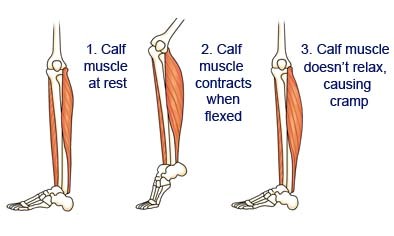
Leg cramps or Charley horse (term used mainly in Canada and the US) is a common but harmless condition experienced by most individuals. These are sudden painful contractions of the leg muscles often in the calf area. They can last for seconds to a few minutes and rarely last more than 10 minutes.
हिंदी में पढ़ें: पैर में ऐंठन - कारण और बचाव के उपाय


Here are a few causes that may explain this condition:

  • Prolonged tightening of muscles that causes contractions, usually seen while sleeping.
  • Muscle overuse during exercise or use, commonly experienced by athletes/sportspeople.
  • Muscle strain.
  • Dehydration, causing electrolyte imbalance usually due to loss of sodium/ potassium/ calcium from body. Seen mostly during diarrhea, vomiting, etc.
  • Poor blood circulation in the legs due to Peripheral artery disease or Diabetes.
  • Liver problems such as from alcohol abuse, cirrhosis that build-up toxins in blood.
  • Chronic kidney failure
  • Certain medications such as oral contraceptives, diuretics, statins and salbutamol.
  • Lead or mercury poisoning
  • Addison’s disease or adrenal gland insufficiency
  • Pregnancy, especially in the last trimester
  • Neuropathy due to Motor neuron problems, Parkinson’s etc
  • Flatfeet
  • Cold weather
  • Idiopathic or unknown

How to get rid of the cramps:

  • Stretching by straightening the muscle affected.
  • Walking on tiptoes for a few minutes.
  • Cold compresses for chronic cramps.
  • Gentle massage of the muscle with hands.
  • Painkillers may be helpful if there continues to be tenderness in the muscle after the cramp.
  • Quinine (an anti-malarial drug) has been shown to be effective in recent research but has various side-effects. Please check with your doctor before taking this drug.

How to prevent cramps:

  • Do regular stretching exercises. While exercising, always start with warm-ups and avoid over-exerting the muscle. Increase the workout intensity gradually
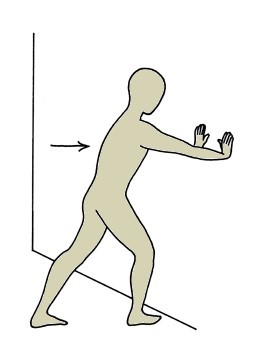
  • For frequent calf cramps, stand a meter away from a wall and stretch forward towards the wall with soles on the ground. Hold and repeat this stretching for five minutes.
  • When sleeping, use a pillow under the legs or let them hang over the bed. Loose blankets and spacious bed is also helpful.
  • Drink lots of water to stay hydrated.
  • Include foods that are rich in potassium, calcium.
  • Wear proper footwear if you have flat feet.
  • Magnesium supplements are recommended for pregnant women.
Changed
10/Jul/2023

Stories

  • Highest number of diabetes-linked TB cases (302,000) in India, says Lancet
    Diabetes is making an increasingly important contribution to the TB epidemic and a 52% increase in diabetes prevalence recorded over the last 3 years in the 22 highest TB burden countries is thought to be responsible for a rise in diabetes-associated TB cases from 10% in 2010 to 15% in 2013,” says the Lancet study to be published in the medical journal this week. Read more here  Diabetes has long been known to be a risk factor for active tuberculosis and reactivation of latent tuberculosis…
  • Yoga Urdhwahastottansana - Hypertension, Respiratory
    Urdhwahastottansana opens up the chest, improves blood circulation around the thoracic area and the heart and is beneficial for respiratory disorders, hypertension and heart problems Meaning Urdhwa means upward, hasta is hands, uttana is stretching and asana is posture. Benefits of Urdhwahastottansana 1. This asana stretches both sides of the body, so it massages, loosens and exercises the sides of the ribcage and the waist 2. Opens up the chest 3. Improves blood circulation around the…
  • Healthy Foods and Treats in Singapore
    Juliana Lim has had Type II diabetes for 27 years. Here, she shares her diabetes and cholesterol friendly secrets and her little treats. She is a committee member of Diabetic Society of Singapore and represents the Diabetic Support Group.  Food - Try to include the following in your daily diet: 1. Small black fungus -These are easily available in supermarkets and can definitely help to manage your blood sugar. 2. Ladies fingers (Okra) - Try to get the fresher ones.…
  • Cardiovascular Diseases
    is a term that refers to different problems or disorders affecting the heart. In Asian countries, heart disease has become increasingly prevalent in recent decades and now accounts for about one third of all deaths. This is mainly because of changing lifestyles – people eat foods with higher energy and fat and lead more sedentary lives.  Causes and Risk factors : http://www.patientsengage.com/conditions/cardiovascular-diseases/causes-risk-factors Signs and Symptoms…
  • Medication and meditation
    High cholesterol and heart trouble ran in her family. But Varsha Marfatia, 85, didn’t let it control her life, says her grand-daughter Utsa Shah.  Tell us about your grandmother’s condition.  She had high cholesterol leading to angioplasty.  When was she diagnosed? She was diagnosed with high cholesterol in 1974 when she was 44. She had developed yellow deposits under her eye. She was tested and immediately put on medication. Initially her cholesterol levels were…
  • Salt to taste
    Just as too much salt leads to health problems, so does too little. How much is just right? Hear it from Dr Gita Mathai, paediatrician and family practitioner. Salt was a precious commodity in historical times. The word “salary” is derived from “salt” and Roman soldiers were paid partly in salt. Valuable employees were described as “the salt of the earth” and dispensable ones as “salt that had lost its flavour.” Somewhere between the Roman era and the 21st century…
  • The Sweet Truth
    All you need to know about artificial sweeteners and sugar-free treats. By Dr Gita Mathai, a paediatrician and family practitioner.  Food is enjoyed if it looks, smells and tastes good. It needs to provide an appetising blend of salt, sugar, bitters, sourness and spice. The first three in excess are “injurious to health”, and, of these, sugar is considered the greatest villain of all. It is purported to be singlehandedly responsible for the global epidemic of…
  • External signs of disease
    What your body may be trying to tell you
    Abnormally dry skin? Change in hair colour or shape of your nails? Even simple changes in the body may signify an underlying problem that you need to get checked out. By Dr Gita Mathai, paediatrician and family practitioner, shares tips to help you stay vigilant. The Skin should be a healthy colour.  • If it turns yellow, you may have jaundice.  • If it looks pale, get checked for anaemia. Here's how to manage iron-deficient anaemia. • Excessively cracked and…
  • Ramadan Fasting Tips For People With Diabetes
    People with diabetes need to be very careful during Ramadan in order to maintain good glycemic control. Here are some tips for those who are fasting during this period.  During the fasting month of Ramadan, Muslims all over the world are fasting during daylight hours, eating two meals a day – Sehri or Suhoor (at pre-dawn) and Iftar (at sunset).  For people with diabetes taking insulin or on some medication, the many hours without food and water puts them at risk of…
  • , , ,
    Yoga - Sarpasana or Snake Pose
    Meaning Sarpa means snake. Sarpasana mimics the posture of a snake. Benefits of Sarpasana 1. It strengthens the back and makes the spine supple. 2. The posture helps to stretch the abdominal cavity and the chest. 3. It stimulates and directly exercises internal organs such as the pancreas, intestines, liver and kidneys. Thus Sarpasana is believed to help manage diabetes. 4. It massages the pelvis and the reproductive organs, helps in menstrual and other gynaecological disorders. 5. It deepens…