

Shilpi Bhattacharya, who lives with a rare disease GNE Myopathy shares her rookie reflections on being married to Abishek Muthian who lives with a disabling set of rare diseases called Pseudoachondroplasia (PSACH) and Multiple Epiphyseal Dysplasia for the last 3 years.
I was always a hopeless romantic - I grew up reading Pride and Prejudice. But life changed and the romance seemed to slip away when I was diagnosed in my twenties with a rare and debilitating disease called GNE myopathy, which causes loss of function in the muscles. (Read more about her https://www.patientsengage.com/personal-voices/your-rare-disease-story-holds-power-change)
Disability can be an incredibly lonely experience and dating with a disability can crush the spirit of the most hardened romantic. Many people (including me) believe that love will not find them because they feel unworthy and are scared to be vulnerable. But because of the loneliness of disability, finding the right person and opening up to them, seeing yourself through their eyes as someone who is much more than their disability; can be transformational. Everyone, and most of all people with disabilities, deserve to feel loved and cared for and have someone with whom they can face the challenges of life together.
Life is full of surprises because just when I had given-up on finding a romantic partner and was preparing to grow old alone; my own version of Mr. Darcy came along and our marriage of three years has been a story that would make Jane Austen proud. Not many romances have both protagonists as disabled. My husband Abishek also lives with a disabling set of rare diseases called Pseudoachondroplasia and Multiple Epiphyseal Dysplasia, which cause dwarfism, bone weakness and Osteoporosis.
We met through a WhatsApp group for adults with rare diseases. I was running a month-long campaign for rare disease awareness and actively posting on the group. Abishek was impressed by my efforts and reached out to me under the guise that he wanted my inputs on accessible fashion for an accessible e-commerce platform he was building for a hackathon (Abishek is an independent software developer who builds products to solve health problems). We started chatting and realised we had a lot in common in our outlook, likes and dislikes, politics, etc. Abishek is very sharp and well-informed but what I loved most about him was his sincerity and affection. After a long time I felt that I had met someone genuine whom I could talk to about anything without judgment. One day I asked him, will you still love me if I become completely unable to move my hands and legs. He responded, I would love you just the same even if you were a blob.
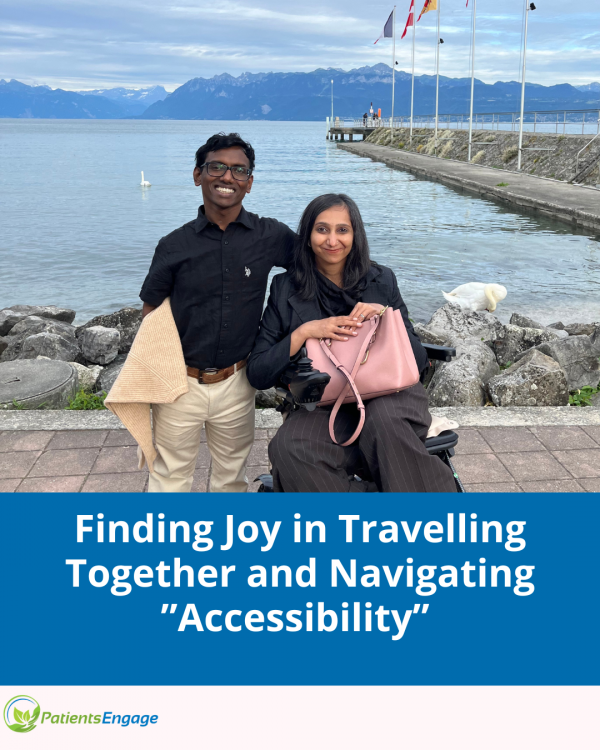
When we decided to get married, Abishek said, people will think we are marrying each other because we couldn’t find anyone else. They won’t understand that the love that we share for each other has not much to do with our disability. This is often something that people with disabilities face - being ‘set up’ or married off to someone else with a disability because it is assumed that they won’t find anyone else. Because disability is viewed as a burden, people are not seen for who they are beyond their disability. When marriage came up, I was initially scared that Abishek’s family would not accept me as I am more severely disabled and in my mind, I could not perform the conventional role of a wife who cooks, etc. But I was so happy that we were both accepted into each other’s families with immense love.
Married life was a big change for us because we now had to run our own household, while previously we lived with our parents and focussed more on our careers and health. After marriage, we have put more effort towards building our lives together. Abishek moved from Coimbatore to Delhi so that I could continue working as a professor at O.P. Jindal Global University.
Here I share some of our experiences that may give some insights to other disabled couples who are looking to get married.
What makes marriage between two persons with disabilities different?
- Understanding and acceptance are front and centre: I live with progressive muscle loss and I struggle to adapt to and understand my weakening body. Marriage forced me to confront another person’s disability and to accept it as if it was my own. Ironically, this helped me to also be kinder to myself and tell myself not to be frustrated with my progressing disability just the way I would approach Abishek’s disability. With progressive disabilities we have to keep adapting to our reduced abilities and the changes it brings to our lives. Sometimes it is hard to accept a disability that we hadn’t seen in our partners before. We feel that if our partner just tried harder it would be possible to overcome the limitation. This also becomes a process of unlearning and re-defining gendered roles, societal expectations and our own wants and needs. Abishek had no experience of cooking prior to marriage but he learnt pretty quickly that he couldn’t rely on someone else to take care of food for him. Now, he prepares our dinner most days and takes care of cleaning-up after meals. When friends come over to our house (which is often, as my disability makes it difficult for me to go to their homes) Abishek is the host - getting things for them and clearing-up after they leave. I have less flexibility with my work than Abishek so he also adjusts to my work schedules and takes on more household work when needed.
- Philosophical agreements on disability are essential: how a person views their own disability is important in a marriage because if both people have different emotional and philosophical approaches to disability, it could lead to some disagreements. Both of us believe that disability lies in the barriers created by society and our environment, which we should work to resolve rather than giving up or feeling ashamed of our limitations. This really helps us navigate everyday problems as we spend a lot of time discussing what are the best solutions for us. For example, Abishek, who is an engineer, has figured out different ways to reach for things that are too high for him since he wants to be independent. It has become harder for me to reach for things that fall on the floor so Abishek gave me a gadget he had that could be used to pick things off the floor so that I could also be more independent. This is not to say that there aren’t days when we feel overwhelmed or despondent about our disability. But in those times of bleakness, what gives us strength is being with each other and our spirit of togetherness.
- Working as a team: helps us to get through the day. To manage our lives we know that we need to adapt to what each of us can manage. I need a lot of help with my daily tasks and my husband is always just a call away, which is not easy since he also has to deal with his own disability. On the positive side, having different abilities allows us to divide household chores based on what we each can do, so there aren’t many arguments on who does what! My job is to make sure we have all the things we need and to coordinate with our household help and manage finances. Abishek does more of the cooking, cleaning and household maintenance like getting household appliances repaired.
- Joy in the little things: every day of marriage has been joyful because of the little things like knowing my husband will come to help me out of the car and take me back home when I get back from work or eating dinner together every day, particularly when we cooked the meal together while chatting about the day. My husband does small things to show his love like when we have a fight, I will find a card waiting for me with a sweet message that will make me smile.
- Joy in the big things: I have always loved travelling but in recent years my increasing disability made it very difficult for me to travel on my own and while I enjoyed travelling with my parents, I also wanted to travel with people my own age. Since being married, we are excited to travel and adventure together because we enjoy doing similar things like being in nature and visiting museums - though we disagree on which museum to visit. In our short time together, we have snorkeled with sharks (something I would have never done on my own), gone up a mountain and seen the Alps up-close. We have also had scary wheelchair moments where my wheelchair was stuck and a kind passerby helped us out and we have navigated numerous hotels where despite our room being “accessible” I struggled to take a shower or use the washroom without Abishek’s help.
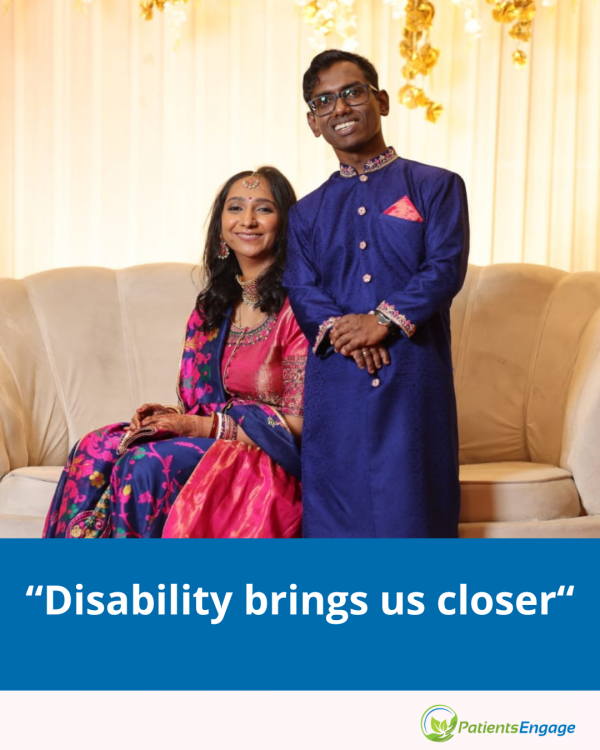
- Disability brings us closer together: because it allows us to do many things together that other couples may not do e.g. cooking together. I need help with lifting vessels, opening jars etc. so Abishek does those things for me and we end up working together in the kitchen. When Abishek enters a public washroom to help me, people often look at us scandalized that we are going into a washroom together - it seems to cross some moral boundary for them. But while he is doing this to help me, it is also an act of intimacy that brings us closer to each other. Often caregiving becomes an integral part of a marriage with disability - helping each other and taking-on the tasks and responsibilities that the other person can’t do. Sometimes this could feel burdensome when one partner feels that more of the responsibility falls on them when they are themselves struggling with a disability. I feel it is important to talk about these feelings with each other openly and honestly so that they are not carried forward as a grudge in a marriage. Particularly since both of our disabilities are progressive, there is an unspoken sentiment that we must prepare for lives with greater dependence and more caregiving responsibilities.
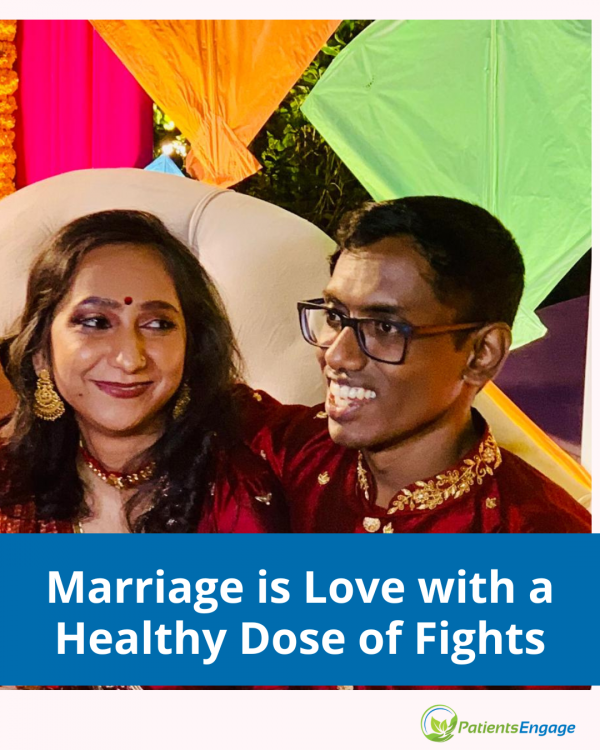
Ultimately, a marriage, whether disabled or not, is about love with a healthy dose of fights!
PS: this article is dedicated to my dearest husband, Abishek
Shilpi Bhattacharya is a Professor at Jindal Global Law School and co-founder of World Without GNE Myopathy. To know more about GNE myopathy visit www.gne-myopathy.org