

Jayesh Shah, a regular contributor on PatientsEngage shares his experience of navigating multiple chronic conditions for the last 38 years starting with a diagnosis of diabetes at 29 and followed by ulcerative colitis, retinal detachment and frozen shoulder. He shares his motto in life and what has kept him going despite what his genetic pool threw at him.
My journey with chronic health conditions began in 1988–89, when I was diagnosed with Type II diabetes at the age of 29. As I have shared earlier (https://www.patientsengage.com/personal-voices/move-it) I had no symptoms but I used to get regular checkups.
Looking back, the diagnosis was not entirely unexpected. Both my parents and one grandparent on each side of the family had diabetes. Although I wasn't particularly surprised, I knew I would need to manage the condition for the rest of my life.
My treatment began with a small dose of oral medication - glibenclamide, if I remember correctly. Over time, other medications were added. Eventually, I began taking insulin injections alongside the oral medications.
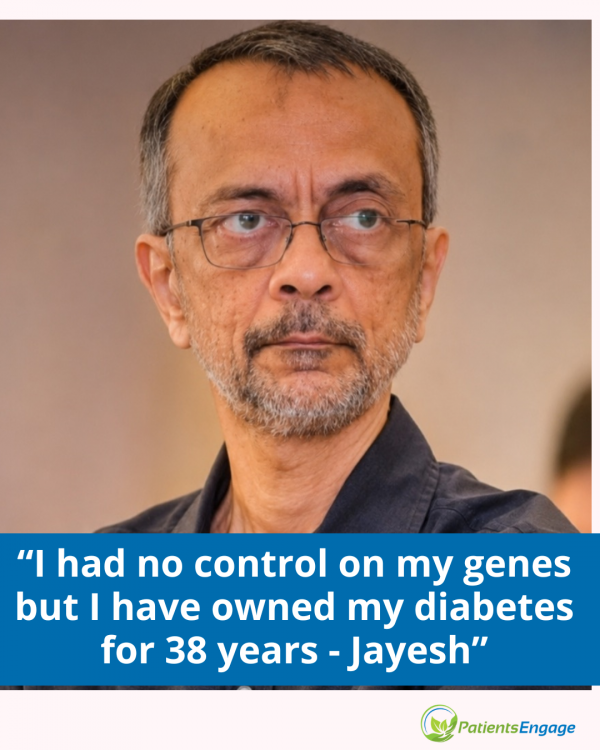
One statement perhaps best describes my approach to this condition over the years: "I had no control over my genes, but I owned my diabetes."
That has been my philosophy from the beginning. I couldn't change my genetic inheritance, but I could take responsibility for managing its consequences.
An unwelcome addition to the list
In 2012, another health issue entered my life. What I initially assumed was a routine stomach upset persisted longer than expected. When it became clear that it wasn't settling down, I sought medical attention. Investigations eventually revealed that I was dealing with ulcerative colitis (UC).
After a couple of months of treatment, I went into remission and, quite honestly, more or less forgot about it. Life went on, and I didn't give the condition much thought. Unfortunately, exactly ten years later, in 2022, UC made a comeback. The symptoms were much the same as before — persistent loose motions, accompanied by reddish-coloured stools. Fresh investigations confirmed that the condition had relapsed, and treatment was initiated once again.
Older and perhaps a little wiser, I realised after the relapse that remission did not mean the condition had disappeared. Since then, I have continued to follow the prescribed medication and dietary regimen.
The UC episode also coincided with another problem. I was already struggling with a frozen right shoulder and undergoing treatment for it. So, for a while, I had multiple medical issues demanding attention.
An unexpected storm
The most serious and unexpected episode came in December 2025.
I was on a road trip through Saurashtra when I suddenly experienced a loss of vision in my left eye. It turned out to be a retinal detachment, a condition that required urgent medical attention.
My immediate reaction might surprise some people. Rather than panic, I went straight into planning mode.
Should I head to Ahmedabad or Mumbai? Should I see my regular ophthalmologist or go directly to a retina specialist? I knew surgery would almost certainly be needed, so there was no time to lose.
We rushed to Rajkot, the nearest big town, where my doctor cousin lives. He had already arranged an appointment with an ophthalmologist. That evening, our suspicion was confirmed: it was indeed a retinal detachment.
Since regular follow-ups would be necessary after surgery, and there was a possibility of more than one surgery, my wife and I decided that the procedure should be performed in Mumbai, where we live.
My wife's calm temperament helped enormously. There was no tension whatsoever. In fact, since it was December 31, we even managed to have a small, impromptu New Year's Eve celebration at my cousin's!
The surgery was subsequently performed in Mumbai. I am happy to report that the recovery has been beyond expectations. The doctor did an excellent job, and I would like to think I played my part by being a good patient! The vision in my left eye is now back to over 90%, and the episode has made virtually no difference to my everyday life.
Looking back, this was probably the biggest medical challenge I have faced, but it was also another occasion when I found myself accepting the situation and focussing on what needed to be done.
Living life without putting it on hold
One thing I have never wanted was to allow my medical conditions to dictate how I live my life.
Throughout much of my career as an IT professional, I have had to travel abroad extensively. Neither diabetes nor my other health conditions led me to turn down work assignments.
Managing diabetes while travelling across countries and time zones became second nature. I learnt to adjust medication, meal timings and insulin schedules to suit the time zone I was in. I have even taken insulin shots on flights! (https://www.patientsengage.com/conditions/diabetes-and-travel-carry-doctors-note)
Over time, I also developed considerable discipline when it came to food. My extended family often marvels at my ability to stay away from sweets. In an Indian household, that is not always easy!
Exercise has also been an integral part of my lifestyle. When I was younger, I used to work out at the gym. As the years have gone by, my exercise routine has evolved. Today, I practice yoga every morning and go for a brisk walk in the evening.
My relationship with doctors and treatment
Initially, my approach was largely to follow my doctors' advice and prescriptions. My involvement was limited to raising questions when my test results indicated that a medication or treatment was not producing the desired results.
Over the years, as I became more informed and began understanding the impact of diet and lifestyle on my conditions, I started taking a more active role in managing my health.
Continuous glucose monitoring (CGM) has been particularly useful in this regard. Through periodic CGM rounds, I have been able to understand how different foods and meal timings affect my blood sugar levels. Analysing this data has helped me make more informed dietary choices and take a more active role in managing my diabetes. https://www.patientsengage.com/personal-voices/my-experience-cgm
While recognising that medical decisions require professional expertise, I like to actively participate in managing my health. Whenever I felt that a line of treatment wasn't working or that I wasn't getting the desired results, I have been willing to seek another opinion. For me, questioning the outcome of a treatment is par for the course but second-guessing the doctor's medical judgement is not.
I have been fortunate to have good, supportive doctors throughout my journey. Rather than single out one as having made a defining difference, I am grateful to all those who have treated me.
The person behind the patient
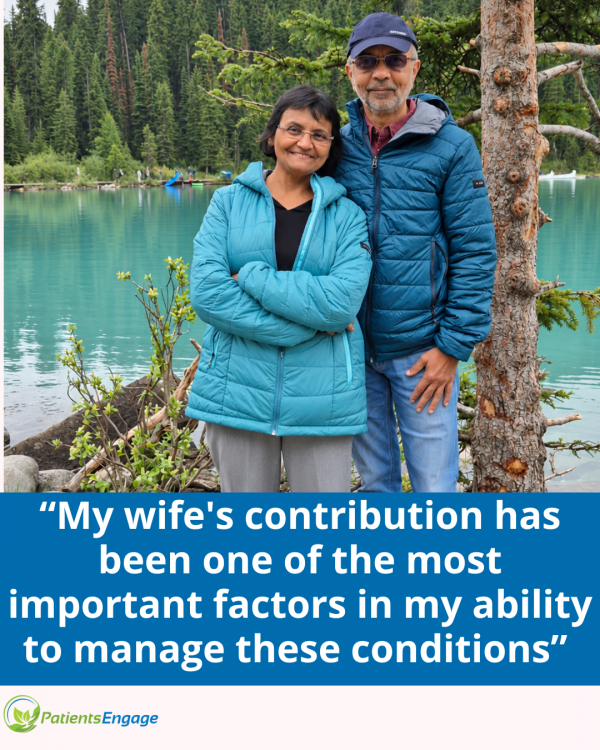
No account of my medical journey would be complete without acknowledging my wife, Ushma. She has faced each diagnosis with remarkable calm and stoicism.
Things became more complicated after my ulcerative colitis relapsed in 2022. We now have to accommodate two dietary restrictions: no sweeteners because of my diabetes, and no spices because of my ulcerative colitis.
For an Indian household, that is quite a culinary challenge! Imagine trying to make tasty Indian food without spices – be it preparing it herself or instructing the cook!
Yet she has taken all of this in her stride, adapting recipes to meet my dietary needs. She has even changed her own eating habits, although she has no need to follow the same restrictions.
During my recovery from retinal surgery, she was up and about, keeping track of the schedule for my various eye drops and ensuring I never missed a dose.
Chronic illness is rarely a journey undertaken alone. Family members adjust their lives and often shoulder much of the responsibility. I have been fortunate to receive such unwavering support from my family.
In fact, it would not be an exaggeration to say that my wife's contribution has been one of the most important factors in my ability to manage these conditions over the years.
Acceptance, ownership and moving on
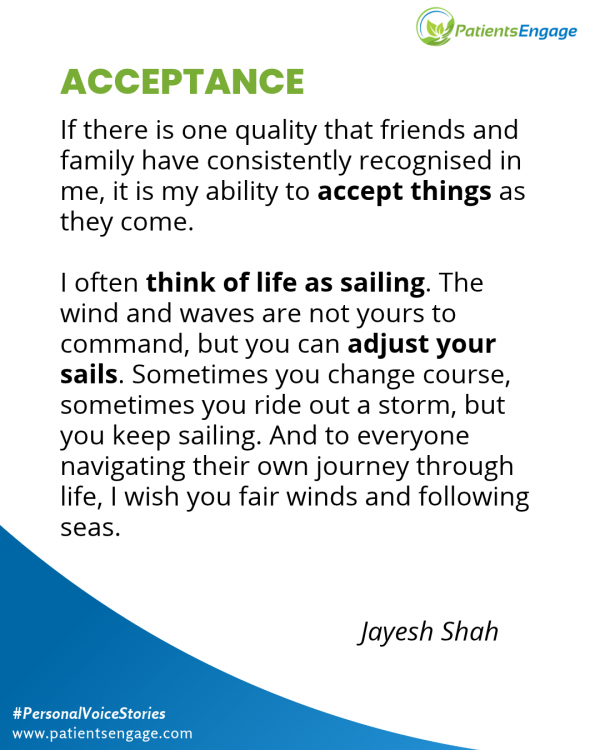
If there is one quality that friends and family have consistently recognised in me, it is my ability to accept things as they come.
I have perhaps been conditioned by temperament to approach both personal and professional setbacks in much the same way. I do not dwell on "Why me?" I prefer to deal with the situation and move on.
Untrue as it may sound, I genuinely cannot recall feeling low or bitter about any of my medical conditions. That doesn't mean managing them has always been effortless. It simply means that I have never seen much value in allowing a diagnosis to consume my thoughts or define my life.
A friend who has known me for over three decades once made an observation that I found particularly touching: "One thought I had was, at least ever since I have known you — almost 33/34 years — you have accepted what the gene pool has thrown at you and incorporated changes in your lifestyle ungrudgingly."
I suppose that captures my approach rather well.
I don't claim to have discovered a formula for managing chronic illnesses, nor do I believe that my way of dealing with things is necessarily the right way for everyone. I am simply sharing how I have approached my own journey.
Over nearly four decades, I have lived with diabetes, ulcerative colitis, a frozen shoulder and, most recently, retinal detachment. Each has brought its own challenges, treatments and adjustments. But none has stopped me from travelling, working, enjoying life or doing the things I wanted to.
I have learnt to accept what I cannot control, take ownership of what I can, and get on with life.
Let me conclude by saying:
“I often think of life as sailing. The wind and waves are not yours to command, but you can adjust your sails. Sometimes you change course, sometimes you ride out a storm, but you keep sailing. And to everyone navigating their own journey through life, I wish you fair winds and following seas.”