Submitted by PatientsEngage on 4 April 2017

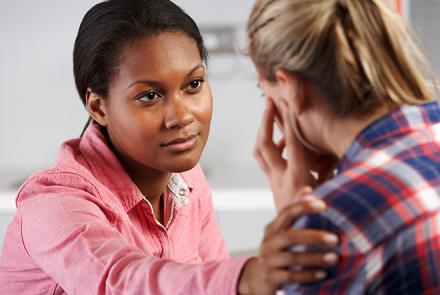
The theme of the World Health Day 2017 is ‘Depression: Let’s Talk’. Encourage people with depression to talk about their feelings. Depression can easily be treated with psychological therapies and medicines. Learn about these and some other basic information on depression issued in public interest by SCARF (Schizophrenia Research Foundation).

The wounds of depression are unseen, but they hurt more than the ones that bleed. Seek professional help and get better.

Facts about Depression

  1. Depression is the commonest disorder of the mind and affects people of all age groups.
  2. It is caused by imbalance of chemicals in the brain.
  3. Stress plays a major role in this disorder.
  4. Feelings of sadness for over 2 weeks without a clear reason, with changes in sleep, appetite, energy and interests, and difficulty in performance at work/school are signs of depression.
  5. It is very different from usual mood swings that occur in everyday life.
  6. Unexplained physical symptoms like persisting aches and pains in one or more parts of the body (eg: headache, backache), palpitations, chest pain and gastric symptoms can be signs of depression.
  7. Women of all age groups are more prone for depression and exhibit more physical symptoms.
  8. Depression is very common in people with chronic physical problems like cancer, diabetes, cardiac ailments, thyroid problems, etc.
  9. Persons with depression can feel hopeless and worthless and may wish to end their lives.
  10. A large number of suicides are the result of underlying depression
  11. Alcohol abuse/dependence can cause depression and also be an effect of depression.
  12. It can be easily treated with medicines, psychological therapies, cognitive behavior therapy and life style modifications
  13. Talking to someone who cares will help. Do not hesitate to seek professional help if needed.
  14. If it is not treated, depression affects quality of life adversely.
  15. Healthy food habits, adequate sleep, regular physical exercise, hobbies, good socialization, and avoiding smoking and drinking can reduce the risk of depression significantly and also help recover from it.

Issued in public interest by SCARF [SCHIZOPHRENIA RESEARCH FOUNDATION(I)]

Changed
04/Apr/2017

Stories

  • Image description: Partial picture of a person on a wheelchair being pushed by a carehver
    "I Realized I Had A Lot To Offer The World"
    Dr Divya Parashar Head of Rehabilitation Psychology at Indian Spinal Injuries Centre narrates what helped one of her patients, who was paralyzed waist down, come out of his self-imposed exile at home to face the world in a wheelchair.  “I don’t want to be seen in a wheelchair, and you can do nothing about it,” said a very determined Deepak (name changed to protect privacy), sitting in my office. A fever had rendered him paralyzed from waist down three years ago. Every morning, he would…
  • Image Description: A dark haired Indian lady with a bindi wearing a white dress and a printed scarf or dupatta draped over her shoulders
    I Think Stress Led To My Insomnia
    Shampa Maitra, 48, a Mumbai-based professional, faced the travails of insomnia, which started in her late teens and lasted for over 25 years. How did she finally get over her addiction to sleeping pills?  When were you diagnosed with Insomnia? Pretty early, when I was about 18/19, around the time I lost my father. What were the early symptoms? It was difficult to fall asleep. I counted sheep till they came home many times over but still could not fall asleep. When I did, it was hard to…
  • Image Description: A head shot of Mr. Akhileshwar Sahay with spectacles as he shares his experience of living with Bipolar, Depression and COPD
    Bipolar or COPD - Never Lose Hope
    And QUIT SMOKING. Akhileshwar Sahay, a seasoned industry veteran, has been living with bipolar disorder for the last 2 decades. In this interview, he talks about his troubled journey with multiple chronic illnesses including COPD, Depression, Diabetes and his commitment to removing stigma related to mental illness.  How did your bipolar disorder start? What were the early symptoms? Bipolar disorder is not like influenza that it is diagnosed at once. Its roots are biological and I was…
  • Image Description: Head shot of a 77 year old survivor of cancer of the vocal chord
    I Now Realise The Value Of Life
    Dilip Kumar Kanjilal, 77 from Kolkata has fought cancer of the Vocal Chords and emerged a winner. He looks back to recall his struggle which has also reiterated his faith in life. Professionally, I used to be a driver of the long-distance state bus for 30 years. I had the responsibility to take the passengers to their destinations safely and I was good at it. Likewise, when I was attacked by the big C-Cancer, I was not engulfed by fear, tension, agony. I faced it bravely like a warrior. What is…
  • Image Description: An elderly person with a walker and supported by a caregiver
    12 Confusing and Overlapping Symptoms in the Elderly
    Symptoms like weight loss, memory loss, weakness, and fatigue should not be mistaken as a sign of the"normal aging" process. Dr. Shital Patel explains 12 common but misleading symptoms in the elderly and why you should seek a doctor's opinion instead of ignoring them.  Symptoms in the elderly can have very different causes than they may have in a young person. Many symptoms in the geriatric population may be masked by concurrent chronic ailments, injuries, age-related physiological…
  • Vector Image of a woman breastfeeding her child
    Does Stress Affect Breastfeeding?
    First time mothers are often very stressed about many different things. In one study on Indian women, 70% felt breastfeeding was a challenging experience. We speak to Dr Zinal Unadkat Shah, a Pediatrician and Lactation Consultant from Mumbai on the effect of stress on lactation. How does stress affect lactation physiologically? Whenever a woman takes stress, it increases the hormone cortisol in the body. Cortisol levels in turn work on the pituitary gland thereby reducing the hormones prolactin…
  • Stock image of a woman in blue scarf in the foreground and a group of people in the background pointing to her
    "Its Time For Film Characters That Survive Cancer!"
    Cancer stigmas are often barriers for seeking diagnosis, as well as treatment and rehabilitation. Shubha Maudgal and Susmitra Mitra of Cancer Patients Aid Association (CPAA), Mumbai give us an insight into the current taboos surrounding cancer and the challenges such stigmas pose for patients and society. 1. What does cancer stigma entail? There are two kinds of stigma involved with cancer. One is Self which is in the mind of patients themselves, stemming from guilt or shame.  The other is…
  • Pushpa Garde who controlled her diabetes with medication, discipline and lifestyle changes
    I Decided To Fight This Lifestyle Disease With Changes In Lifestyle
    Delhi-based Pushpa Garde is 75 years old and has been ably handling diabetes for the last 25 years, mainly with lifestyle changes and a proper diet, which she has maintained meticulously. About 30 years ago I had a boil on my breast which was not healing. Out of fear, I went to a Cancer specialist. My blood test was done and the fasting sugar came out to be 196. I was asked to cut down my sugar consumption. So the first casualty was the sweet tea. I stopped taking sugar in my tea. In Mahabharat…
  • Stock pic of a woman in blue top and grey slacks applying a nicotine replacement patch
    Try Nicotine Patch to Help You Quit Smoking
    Dr Rajam Iyer, pulmonologist and palliative care physician, gives us an overview of Nicotine Replacement Therapy, a treatment to help people quit smoking, and strongly recommends its promotion among smokers and the need to test it for smokeless tobacco (bidi) users. What is Nicotine Replacement Therapy? Nicotine replacement therapy is a treatment that smokers can benefit from. As smokers are addicted to the nicotine in cigarettes, that causes physical dependence, NRT helps in controlling the…
  • Stock image of a woman in a white shirt celebrating in a green field with a new look with a scarf to address hair loss during chemotherapy
    Coping with Hair Loss during Chemotherapy
    Rebecca D'Souza, clinical psychologist with Nag Foundation, an NGO in Pune working for the welfare of cancer patients, says losing hair due to chemotherapy is one of the biggest fears for women, and suggests ways of dealing with the stress and emotions. Cancer is a much maligned and dreaded disease partly because of the lack of awareness and partly because of our understanding of the disease and its treatment. Lack of awareness is one of the main reasons for late diagnosis and a lack of…