
Preeti Phad’s journey with cancer began long before she truly understood what it meant. She was diagnosed almost 30 years ago with Retinoblastoma, a form of eye cancer, at 9 years of age. The condition eventually led to the removal of one eye and required intensive, prolonged treatment. But the impact went far beyond the medical procedures. Growing up, she had to navigate a world where she looked and felt different, often struggling to understand why.
Preeti, when were you diagnosed with Retinoblastoma?
I was diagnosed at the age of 9 in 1996. Nearly 80% of children with Retinoblastoma are diagnosed before age 3.
What is Retinoblastoma
Retinoblastoma is a kind of eye cancer that starts as a growth of cells in the retina. The retina is the light-sensitive lining on the inside of the eye. Typically Retinoblastoma happens in young children. It most often affects one eye. Sometimes it happens in both eyes.
Retinoblastoma signs and symptoms include:
- A white color in the center circle of the eye when light is shone in the eye. It might show up in flash photos.
- Eye redness.
- Eye swelling.
- Eyes that seem to be looking in different directions.
- Vision loss.
Early symptoms and first signs of Retinoblastoma
My symptoms were not recognized early. Unfortunately, this is very common in many childhood cancer cases where awareness is limited.
The first sign appeared on what should have been an ordinary, happy school sports day. In the middle of all the excitement, my teacher noticed something unusual: a small white reflection in my left eye. She gently asked if something had gone into it. I told her that I felt no pain, no discomfort, nothing that seemed wrong.
Looking back, that moment meant much more than I realized at the time. Somewhere deep down, I had already begun adapting to the loss of vision in that eye. I didn’t know when it started, and I never spoke about it. As a child, I didn’t have the awareness or words to explain what I was experiencing I simply adjusted, quietly and unknowingly.
What I couldn’t recognize, my teacher did. Concerned, she immediately called my mother and grandmother to school. They took me to an ophthalmologist who said to remove the eye but my grandmother refused.
Diagnosis of Retinoblastoma
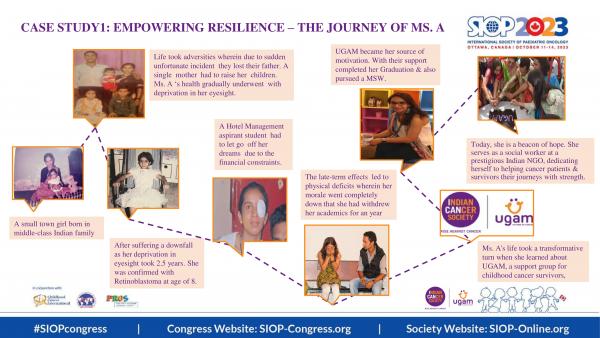
For the next year and a half, I was taken to multiple doctors, but no one clearly explained the condition. At one point, I was admitted to a government hospital for about one and a half month, where I was told there was a “layer” over my eye that could be removed with light therapy. After that procedure, my left eye began to enlarge and looked abnormal. Even the colour of my eye had become grey and green and kids at school would refuse to sit next to me. One day while walking on the street with my grandfather, a lady stopped me and asked to come over for a check-up. My mother took me to her house the next day and she took us to a private hospital, where a senior Ophthalmologist examined me and immediately advised removal of the eye to prevent rupture. However, we had no money, so the same social worker lady took the imitative to get my surgery done.
After the surgery, I thought my left eye will become normal like my right one but the first time I saw myself in the mirror, I was shocked, there was just a hole where my eye was. My mother told me a story that my eye would grow back and I believed her.
Soon complications appeared like lumps near my left ear and neck. After additional procedures and biopsy reviews, I was referred to Tata Memorial Hospital, where my diagnosis was confirmed, and it was found that the cancer had metastasized due to delayed treatment.
Reaction to diagnosis
At that age, I wasn’t told or aware that I had cancer. I didn’t fully understand what was happening to me, or why my life had suddenly become filled with hospital visits and treatments. But even without words, I could feel it. I could sense the fear in the conversations, the worried looks, the heaviness that surrounded my family. Most of all, I could see it in my mother. She was raising three children on her own, and yet she carried this invisible weight with incredible strength.
Treatment journey
At Tata Memorial Hospital, the next phase of my treatment began. I underwent six cycles of chemotherapy followed by 28 sessions of radiation.
The treatment was intense and exhausting both physically and emotionally. I experienced hair loss, darkening of my skin, and visible radiation marks on my face. As a child, these changes were difficult to understand and even harder to accept. I had to wear black goggles all day. At that time, there was no awareness that the socket should be kept covered.
While other children spent their days in classrooms and playgrounds, most of my school years were spent in hospital wards, treatment rooms, and waiting areas. That became my world for a long time. For my mother, managing everything as a single parent work, home, and three children was an immense challenge. When I was 11, I started going for my maintenance Chemotherapy alone. I would have Rs 10 on me, 6 for my train ticket and 4 for a lassi after the procedure. Taking on this responsibility at a young age made me more aware of my situation. It was during this time, slowly and quietly, that I began to understand the truth on my own that I had been diagnosed with Retinoblastoma, a life-threatening disease. No one sat me down to explain it, but through experiences, observations, and moments of realization, it became clear to me.
That understanding didn’t come all at once it unfolded over time, shaping how I saw myself, my journey, and the strength I was building within.
Complications
Losing one eye had a lasting impact on my body image and confidence. As I grew up, I often felt different from others, which led to emotional challenges such as isolation and reduced self-esteem.
Along with these personal struggles, there were also significant financial challenges. My treatment required extensive care and multiple interventions, which placed a heavy burden on my mother, who was raising three children on her own. Managing the cost of treatment while ensuring day-to-day family needs was extremely difficult for her. Many people told her to stop treatment as she had 2 other children to take care of but my mother did not give up on me. Doctors and staff at the hospital also supported us.
Alternative therapies
My mother primarily followed allopathic treatment as advised by doctors throughout most of my medical journey. However, in the early phase while we were still moving between different hospitals and seeking opinions, she also took me to our village, where I was given some Ayurvedic treatment in a cave setting.
It was a time of uncertainty, and my mother was trying every possible option available to her out of concern and hope for my recovery. Eventually, we continued with the medical treatment recommended by specialists.
Current medications
Currently, I am not on any cancer-related medication.
Side effects & Management
One of the major long-term effects was after eye enucleation and radiation, where the eye socket gradually became shrunken. This also affected the fit and movement of the eye prosthesis, making it difficult to achieve natural blinking. As a result, there are ongoing physical and cosmetic challenges that require continuous care and adjustments.
I was told about a prothesis centre in Malad where I was first fitted with an artificial eye. It was of poor quality and my eye would not shut. Later I went through 3 grafting surgeries (2 in Mumbai and one in Hyderabad) but all of these attempts failed. My prosthesis tends to get very dry and stuck to my eyelids. 2 years ago, I found out about gel injections for dry socket management. On a daily basis, I wash my eye with cooled warm water every morning and sometimes use artificial tears or gel for lubrication. Washing in public loos is a challenge. I always wear glasses and avoid putting any pressure on it. One way to deflect attention from it is to use good quality eye make-up such as liner or fake lashes.
Follow-up Care
I have been under the care of oncology specialists throughout my treatment journey, and I continue regular follow-ups at Tata Memorial Hospital. In addition, I also consult ophthalmologists for ongoing management of my right eye and care related to my eye prosthesis. These regular consultations help ensure long-term monitoring and overall eye health.
I remain connected with survivorship and psychosocial support networks, which continue to play an important role in my overall well-being.
Family history
There is no known family history of this condition, and no genetic testing was done at the time.
Challenges
The most difficult phase for me was after treatment when the physical battle had ended, but the emotional struggle continued. I was dealing with fear, low self-esteem, and body image issues, which took time to understand and accept. Some of my biggest challenges included body image issues, low confidence, financial difficulties, interrupted education, and emotional struggles.
I was without an eye prosthesis until around 7th–8th grade, and even after receiving it, adjusting to it was not easy. Being diagnosed with cancer at a very young age gave me a unique identity for life, but it also came with long-term challenges. These include issues around social acceptance, stigma, and body image. There are also practical concerns such as limited or no medical insurance coverage for survivors in many cases, and added anxieties around future milestones like marriage and long-term acceptance in society.
Body Image is the reason I took a break during my college years. I used to never wear spectacles and due to radiation side-effects, my socket and skin around my eyeball had shrunk. During my 2nd year in BCom, when people would stare at me in college, I became very conscious. My eye also started bothering me with every movement and till today I cannot blink my left eye. In the final year, I stopped going to college after a few weeks due to loss of confidence.
A major turning point in my healing came when I became a part the childhood cancer survivors’ group UGAM. Being part of this community gave me a sense of belonging, acceptance, and purpose. For the first time, I felt understood by people who had lived similar experiences.
Life changes
This journey has shaped my life in a very profound way. It influenced not only my outlook but also my career choices.
One day, I came across Dr Karkare at Indian Cancer Society and under her guidance, 9 of us survivors started UGAM. I then went on to complete my graduation and started working as a medical secretary and then with few cancer organisations affiliated with Tata hospital. I was though not satisfied with my career, so I went on to pursue my Master’s degree in Social work. I chose to pursue social work and dedicate my professional life to supporting cancer patients and survivors. I went on to later take over UGAM and am still working there. My lived experience is now central to my work and is deeply valued as a strength. It allows me to connect with cancer patients and survivors in a more meaningful and empathetic way.
Rather than being a limitation, my journey has become a source of insight, purpose, and direction in the work I do today.
Alongside this, I place strong importance on mental well-being, self-acceptance, and maintaining balance in daily life. My experiences have taught me to be more mindful, resilient, and compassionate toward myself and others.
Counselling
Formal counselling support was limited during my journey. However, emotional support through peer connections and fellow survivors played a very important role in my emotional healing. Being part of a survivor community helped me process my experiences in a healthier way and made me feel understood without having to explain everything.
I also received support from psychologists at different points in my journey, which helped me navigate emotional challenges and better understand my thoughts and feelings during and after treatment.
Over time, this combined support contributed to significant personal changes in me. I became more open, confident, and expressive, more “bold and fearless” in how I carry myself and face life. It helped me rebuild my identity beyond illness and accept myself with greater strength and clarity.
Family support
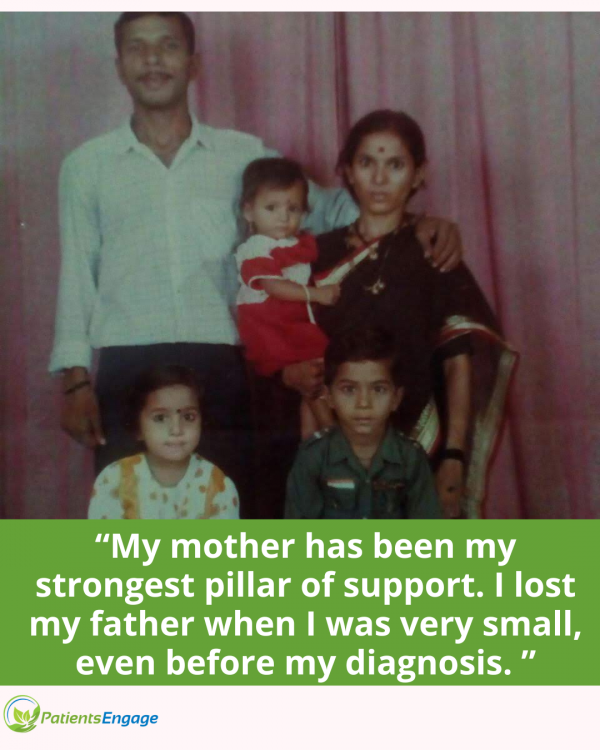
I lost my father when I was very small, even before my diagnosis. My mother has been my strongest pillar of support. I often say she gave me life twice once at birth, and again through this journey of survival. Despite immense financial and personal challenges, she ensured that I received the best possible treatment and care, never giving up at any point.
My brother and sister also stood by me in their own ways, contributing to emotional strength and stability within the family during the most difficult phases of my treatment and recovery.
Friends and relatives
Over time, people became aware of my condition. In my school years, I did not face discrimination my friends and teachers were very supportive, and that environment gave me strength during a difficult phase of life.
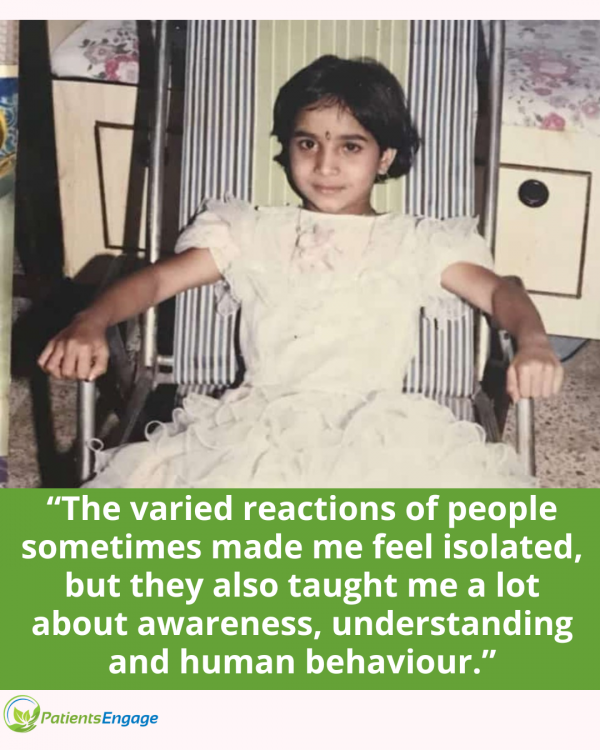
However, outside of school, my experiences were mixed. Some people I met in different stages of life misunderstood my condition and even treated it as if it were contagious. While a few responded with sympathy, others showed genuine empathy and encouragement, which helped me stay motivated. These varied reactions sometimes made me feel isolated, but they also taught me a lot about awareness, understanding, and human behaviour.
My achievements
Today, I am doing well and leading a meaningful life. I work closely with cancer survivors and advocate and collaborate for survivorship care on global platforms.
Below are some of my achievements:
- Founding Member & Manager, UGAM (ICS) – advancing survivor-led childhood cancer support in India
- Member, Global Survivorship Steering Committee, CCI Asia Survivors Working Group & ICCI Survivorship Task Force
- Panelist, SIOP-CCI Conference (Ottawa 2023); invited SurNet Member, SIOP-CCI 2025 (Amsterdam)
- Member, Ethics Committee (Tata Memorial Centre, Mumbai) (2024–2026)
- Trained Patient Advocate - Certified PARC Training (NCG and PatientsEngage), CReDO 2026 (NCG)
- Presented at International Society of Pediatric Oncology (SIOP-CCI): 2023 (Ottawa): Case Study Analysis of Young Cancer Survivors’ Achievements & Milestones in LMIC and 2015 (Cape Town): Impact of Childhood Cancer Survivors Support Group – Lessons Learnt from UGAM
- Authored research: “Issues & Concerns of Childhood Cancer Survivors” (MSW term paper)
Advice to others
Healing does not end with treatment. For me, I learned that recovery is not just physical it is also emotional and psychological. It is okay to struggle, but you do not have to go through it alone. Seeking support, whether from family, peers, or professionals, makes a significant difference.
Be patient with yourself, and slowly learn to recognize your own strength, even on difficult days. It is also important to be aware of your rights as a patient and survivor, and to stay informed about the support systems available to you. Sharing your experience, can also help motivate and inspire others who may be going through a similar journey.
Concerns for the future
Like many childhood cancer survivors, I am aware of the possibility of long-term health effects and late complications. These concerns remain, but I try not to let them define my present. Instead, I focus on living meaningfully, staying aware of my health, and continuing regular follow-ups as advised. For me, balance comes from staying responsible about my health while also living my life fully today.