

Indy, 54 has been living with a stoma bag for well over 2 decades. She shares her initial discomfort and fears of living with ulcerative colitis and how she has now learnt to live and travel with a medical necessity which saved her life.
Please introduce yourself for our readers.
My name is Indy, I have been living with an ileostomy for the last 15 years and I have suffered from ulcerative colitis for more than 10 years prior to that.
Please tell us a bit about your condition - when were you diagnosed, the early symptoms? Is there a family history?
I was first diagnosed in 2000 after the birth of my second child. The early symptoms were nausea and sickness, constant stomach pain, headaches and fluctuations between constipation and diarrhoea. The only person in my family who has something similar is my mum, she has a sensitive digestion system but has never been formally diagnosed.
What tests were done before the diagnosis of ulcerative colitis? How long did that diagnosis take?
I had a stomach ultrasound scan, a colonoscopy and a blood test. It took around a month for all the reports to come back and for a final diagnosis.
How has the management of the condition(s) evolved over the years?
My ulcerative colitis was unmanageable and was steadily worsening until I got my stoma. After my operation for my stoma I slowly transformed my lifestyle to accommodate it. First, I started cooking all my own meals using unprocessed food and making sure I had a healthy balanced diet. Certain foods can cause issues with the stomach like excess fibre or not enough salt so I had to keep that in mind. I have to make sure I exercise and move my body often, I like to walk on the walking pad every day, and when I travel I go on long hikes and explorations.
Did you consider using a PEG tube?
No.
What made you decide on a Stoma bag? Explain the decision process.
After trying countless medications and therapies suggested by the doctor, my condition was not improving and was causing a massive impact on my quality of life. As I had been on so much medication over 10 years to try to manage the colitis, the consultant informed me that there is now a risk of developing bowel cancer. He told me that it was best to undergo surgery to have a permanent stoma. When I first heard the news I was devastated and really scared. I did not know anyone who had a stoma bag and there was a big misconception that stomas were only for the elderly in care homes. After great consideration and advice from my husband and other healthcare professionals, I decided that I will undergo surgery to get a stoma bag.
Could you please describe the challenges - medical, physical, emotional, social. Include side effects of the various treatments.
Trying so many different treatments was very disheartening and difficult due to all the side effects, with no end in sight. I had to look after my family and myself while going through the hardest time of my life. There were so many different side effects of all the treatments like weight gain, lack of sleep, extreme fatigue, sickness, nausea, lack of energy, depression, leading to me staying in bed.
What was the impact on life choices, on family dynamics, social choices?
It was hard to get myself out to see family and friends not only because of the medical side effects, but the constant worry of having to go to the toilet, and the fear that some foods will likely flare up my pain. My mental state was not in the best place, so it was hard to put up a happy face all the time.
How did you get past the “gross” factor?
It took a long time to accept such a permanent change to my body, especially one that is seen as ‘gross’ or taboo. Ultimately, the thing that helped me move past this was a lot of self love and acceptance that this was the best choice for my body. I began to have faith in the belief that there is nothing gross about a medical correction that changed my life for the better. Researching and finding more people in the same position has also helped normalise my condition.
Has it been difficult emotionally to cope with your condition? Did you see a counsellor to help cope with the emotional distress?
No, I never saw a counsellor due to the societal values of my culture towards mental health and therapy. I simply did not see this as an option. I coped alone and had to stay strong for myself and my family.
What does a typical day look like?
I work in a supermarket part time, on my days off I tend to my garden, cook lovely food, meet my friends. I visit Spain often too.
What is the hardest part of living with the condition? What were some of the challenges you faced and what is your advice to patients who face similar challenges?
The hardest part of my condition is if I get bloating or acid reflux issues and when my stoma bag bursts overnight, making a mess. I have to make sure I have good supply of stoma bags and other related medical supplies, especially when I travel. The best advice I give to anyone is to stay positive, try not to be too hard on yourself and always listen to your body. Do not be afraid to ask for advice and support when you need it, there are so many people out there waiting to help you. I have joined lots of social media groups for advice, and also to spread awareness. We can all help each other with similar conditions so nobody feels alone on their journey, this is very important for us.
How has your family supported you? How did your friends treat you? How does your diet change and lifestyle change impact your social engagements?
Recovery was very hard for the first few months, the body takes time healing. But now I can travel anywhere without feeling the constant anxiety of finding the nearest toilet. It's a very big change to have a stoma bag. I am very lucky that I have a very supportive husband as well as supportive and understanding kids who have accepted and loved my stoma since day one. No one treated me any different when I had a stoma, sometimes it took a bit of explaining to those at work or the elderly in my life. But once I explained, they were extremely understanding and accommodating. It is best to be open and honest with those in your life, giving them a chance to be there for you. Anyone who makes you feel small or absurd does not deserve you. Apart from making sure I have all my stoma supplies for social engagements, and do not wear anything too tight covering my stomach, gradually with time I have been able to have a much more active and fulfilling life with my stoma compared to how I used to suffer earlier.
How does your condition affect certain aspects of your life?
I have not let my life change too much because of my stoma. My condition has made me more resilient and self loving.
Travel: On a daily basis or long distance
I live walking distance to work. If there is ever an accident I can run home. If I am travelling, I have to really make sure I have all my supplies with me and enough of them.
Attending social functions:
As long as I have my spare stoma supplies with me, I cope well. In the beginning stoma care was not as good as it is now. It has evolved greatly. The materials of the bag, which is durable and waterproof, the sensitive skin wipes and skin care have all contributed to a better experience. I do not have any problems now when going out.
Impact on your wardrobe:
I prefer to wear clothes that are not tight over my stoma, I love nice flowing dresses, elasticated trousers, looser tops. I am still able to express my self with my clothes in the same way.
Learning to change the stoma bag or requiring help:
The stoma nurse had given me a lot of support in the beginning, I then found social media groups, forums and leaflets that give me tips or tricks on how to handle a stoma bag the best way. I am always learning something new when it comes to my stoma.
Complete the sentence
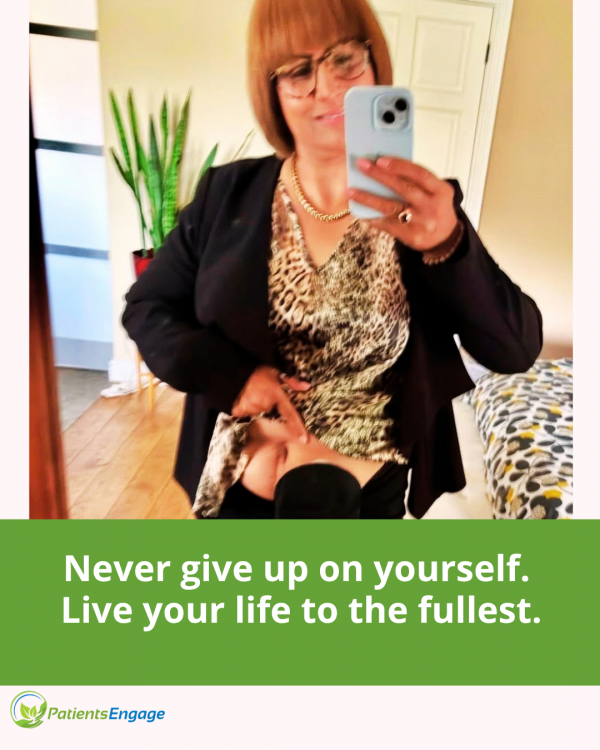
My motto in life: Never give up on yourself. Live your life to the fullest.
I was inspired by: Everyone else who has been living with invisible illnesses like my own, they carried on every day like normal despite the challenges they faced. This inspired me to do the same and not let my condition define the trajectory of my life.
The strangest comment/reaction I received: ‘At least you don’t have to waste the toilet paper!’
The funniest moment was: My stoma bag making fart noises when I am relaxing or when I am out! (At least I did not lose the humour of a fart noise)
The most annoying moment: When my stoma bag bursts or leaks
The best thing someone said: ‘You don’t have to tell anyone until you are ready. Live your life the way you want.’ - My lovely friend.
I love: Cooking, travelling, spending time with my family
I hate: When people tell you they know what you are going through, even when they have no idea what you go through with your health conditions
I fear: My only fear is running out of a stoma bag when travelling.
My biggest support: My husband and my children
The best gift I got: My stoma is the best gift as it got me my health back.
I wish: That I stay strong and healthy for my family.
As told to Moyna Sen