  • Graphic image depicting Brain tumors
    Brain Tumour and Cancer
    Brain tumour is an overgrowth of cells, either within the brain or near it in places like nerves, the pituitary gland, and the meninges  Brain tumours can be benign (non-cancerous growth or lumps that generally do not spread to other organs/tissues) or malignant (made up of cancerous cells that multiply and spread to neighbouring tissues and organs and sometimes break away and spread to many organs in the body, a process called metastasis). The prevalence of brain tumours is variable around the world and in India. Approximately 2% of all cancers are brain cancers. The incidence rate globally is approximately 6.2 per 100,000 people per year.  While brain tumours account for a relatively small percentage of overall cancer cases in India, they are a significant cause of mortality, with over 24,000 deaths reported each year.
Submitted by PatientsEngage on 30 July 2025
Brain Tumor Overview

Brain and spinal cord together are known as the central nervous system (CNS). Brain tumour is an overgrowth of cells, either within the brain or near it in places like nerves, the pituitary gland, and the meninges (sheet like membranes that cover the surface of the brain). Tumours can be benign (non-cancerous growth or lumps that generally do not spread to other organs/tissues) or malignant (made up of cancerous cells that multiply and spread to neighbouring tissues and organs and sometimes break away and spread to many organs in the body, a process called metastasis).

The prevalence of brain tumours is variable around the world and in India. Approximately 2% of all cancers are brain cancers. The incidence rate globally is approximately 6.2 per 100,000 people per year.

In India, round 40,000 to 50,000 new cases are reported annually, with approximately 20% of these occurring in children. While brain tumours account for a relatively small percentage of overall cancer cases in India, they are a significant cause of mortality, with over 24,000 deaths reported each year.

Let’s take a look at the difference between these similar terms:

A brain tumour is an abnormal overgrowth of cells in the brain which do not die when they should and thus may cause dysfunction of the brain.

A brain lesion is any area of the brain that has damaged tissue. Brain lesions can be caused by issues like stroke, injuries, infections like encephalitis/meningitis and malformations of the blood vessels like arteriovenous malformation.

Space Occupying Lesion (SOL) is a general term for any abnormal mass or growth within a confined space like the brain or spinal cord. A tumour is a type of SOL. Some space occupying lesions may also be a hematoma (blood clots after injury), a tuberculoma (tuberculosis mass), abscess or cyst.

Changed
08/Jun/2026

Stories

  • Picture of a man
    My First Priority After My Brain Tumour Is My Health
    Melvin George, 30 shares his experience of getting a diagnosis of Astrocytoma, a brain tumour, navigating the care options, the side effects of the cancer and the treatment, how the experience affected him personally and how faith was the bedrock of his recovery. Plus work related challenges. Shocking Diagnosis July 11th 2017. I was on my bed in my dorm room and as I woke up, I saw the ceiling vibrating vigorously. I think that was my first episode of seizure but wasn’t sure what it was at that…
  • Picture of a woman who had brain tumour
    My Brain Tumour Diagnosis Made Me Bold
    When A Chitra, 38 from Bengaluru started having seizures, she was initially treated for epilepsy but was eventually diagnosed with Malignant Glioma, a type of brain tumour. She shares how she handled the gamut of treatment and the emotional distress with the support of her team of doctors, family and friends and employer.  Chitra, please tell us a bit about your condition  I was diagnosed with brain tumour called Anaplastic Astrocytoma Grade III. It is a rare, malignant tumour…
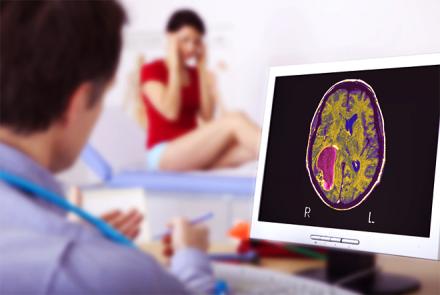
  • Image: A woman holding her head in the background and a doctor looking at a brain scan showing brain tumour
    New Technologies Help in Brain Tumour Treatment
    Nearly 50% of brain tumours detected are cancerous. While advances in immunological and genetic testing will make early detection possible, your biggest wall of armour will be leading a healthy life, emphasizes Dr. Mohinish Bhatjiwale, consultant neurosurgeon at Nanavati Hospital. What are the most common symptoms of brain tumour? The most common symptoms of brain tumour is headache, unremitting headache associated with vomiting and blurred vision, weakness of any one side. What percentage of…
  • Image of Pavithra, a brain tumor survivor in a green dress with her husband in black and son
    A Brain Tumor Need Not be Life-Threatening
    Pavithra Sakthivel, who had severe headaches and a seizure, was diagnosed with Grade 3 malignant brain tumor. But she recovered quickly in six months. Find out about the treatment and surgical options that worked for her.    I am a 36 year old teacher and an Education Specialist. I was leading a happy, healthy life with my husband and cute 6 year old son till January 2017. Trouble began when I started getting headaches. Initially, they were appeared routine, but grew in frequency and…
  • Image: Stock image of two people communicating with each other but the words in the speech bubbles are jumbled
    Speech and Language Breakdown after Stroke
    After a stroke nearly 20-40 per cent patients develop communication problems or aphasia, the inability to comprehend and formulate language because of damage to specific language areas in the brain. Dr Sujata Gandhi, Speech Therapist, Nanavati Hospital, advises that speech and language therapy is the best way to restore normalcy and quality of life. How does a stroke or ‘brain attack’ affect speech and communication? A stroke causes damage to the Speech and Language areas of the brain. For most…
  • A person in a blue shirt and black trouser sitting on a white sofa and holding head in pain. Blue strip overlay with text Brain tumour facts
    When a Headache can Signal a Brain Tumour
    World Brain Tumour Day Primary brain cancers account for 2% of all cancers and represent about 20% cancer deaths per year. Dr. Suresh Sankhla, Consultant Neurosurgeon emphasises that increased awareness about brain tumours can result in early diagnosis, prompt treatment, and excellent outcome. What are the common signs and symptoms of brain tumour? Following are the most common symptoms of brain tumours, which may be present in various combinations. All symptoms are initially very mild but…
  • A woman next to trees taking a picture with a mobile phone
    Don't Ignore Behavioural Changes
    Prem's startling discovery of the root cause of his wife’s altered personality. Prompt diagnosis and treatment gave him back the woman he had married.  In the summer of 2012, my wife’s behaviour started to change. Initially we attributed it to age-activated attention deficit disorder (AAADD). We noticed that she was forgetful, moving from one chore to another unmindful of the earlier one. She showed signs of indifference, depression and withdrawal.  These…