  • Graphic image depicting Brain tumors
    Brain Tumour and Cancer
    Brain tumour is an overgrowth of cells, either within the brain or near it in places like nerves, the pituitary gland, and the meninges  Brain tumours can be benign (non-cancerous growth or lumps that generally do not spread to other organs/tissues) or malignant (made up of cancerous cells that multiply and spread to neighbouring tissues and organs and sometimes break away and spread to many organs in the body, a process called metastasis). The prevalence of brain tumours is variable around the world and in India. Approximately 2% of all cancers are brain cancers. The incidence rate globally is approximately 6.2 per 100,000 people per year.  While brain tumours account for a relatively small percentage of overall cancer cases in India, they are a significant cause of mortality, with over 24,000 deaths reported each year.
Submitted by PatientsEngage on 30 July 2025
Brain Tumor Signs Symptoms

Symptoms of Brain Tumour:

  • Headache or a feeling of pressure in the head that is:
    • Worse in the morning.
    • Persistent or frequent and seem severe.
    • Feel like tension headaches or migraines.
    • May be associated with nausea and/or vomiting.
  • Issues with vision like blurring, double vision, or diminishing sight on the sides (peripheral vision).
  • Loss of sensation or movement in the legs or arms.
  • Issues with balance.
  • Speech issues like slurring, incoherent speech.
  • Excess tiredness.
  • Confusion in matters like orientation to time, taking decisions, or performing daily tasks.
  • Memory loss or lapses.
  • Trouble in following simple commands.
  • Personality or behavioural changes.
  • Seizures (particularly in persons with no previous history of seizures).
  • Difficulty with hearing.

Symptoms based on the location of the tumour in the brain:

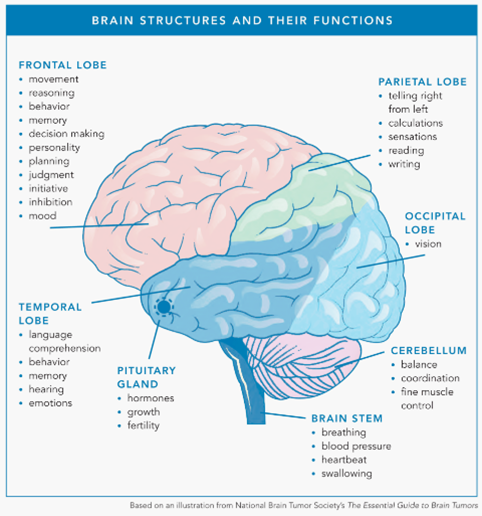
  • Front of the brain: The frontal lobes are in the front of the brain which control thinking and movement. Therefore, tumours that are located there may cause issues with balance, personality changes, forgetfulness, and lack of interest in everyday activities.
  • Middle of the brain: The parietal lobes present in the upper middle part of the brain control processing of information like touch, taste, smell, vision, and hearing. Tumours in these areas may affect one or more of these senses.
  • Back of the brain: The occipital lobes situated in the back of the brain are responsible for control of vision. Tumours in this area may lead to loss of vision.
  • Lower-side part of the brain: The temporal lobes on the sides of the brain help to process memories and senses. Tumours in these areas may affect memory retention and recall.
Changed
08/Jun/2026

Stories

  • Brain Tumor Prevention
    Prevention of Brain Tumour
    Prevention of Brain Tumours: We cannot prevent brain tumours/cancer, but we can reduce our risk of having them. Like any other cancer, brain cancer risk can also be reduced by: Avoid/Limit your exposure to Harmful Substances The toxins in our environment and pollutants can have unfavourable effects on the brain. Pesticides, industrial chemicals, and air and water pollutants, and even indoor pollutants are known to contribute to the development of brain tumours as per the scientific literature.…
  • Brain Tumor Management
    Management of Brain Tumour
    Management of Brain Tumour Role of palliative care: Palliative care helps in improving the quality of life of not just the patient but the families and caregivers of patients with cancer. It has many roles: Symptom Management: Palliative care helps to mitigate and manage many symptoms due to cancer and the related treatment like pain, nausea, fatigue, loss of appetite, and breathlessness. It combines several modalities like use of medications, physiotherapy, counselling etc. Emotional and…
  • Brain Tumor Treatments
    Treatment of Brain Tumour and Brain Cancers
    Treatment for brain tumour and brain cancer: The treatment plan is usually decided based on the physical assessment of the patient, age, advice of the Neuro-oncologist (specialist for brain cancer) and the oncology team or Neurosurgeon (if the brain tumour is benign) and is usually based on factors like: Type of Tumour: Depends on whether the tumour is cancerous or benign, and the specific type of tumour. Grade of tumour: Tumours may range from low-grade to high-grade and the…
  • Brain Tumor Tests Diagnosis
    Tests and Diagnosis of Brain Tumour
    Brain Tumour Diagnosis Process : Initially the doctor (typically a neurologist) will take a detailed history to understand the duration and intensity of the symptoms. They may inquire about past and current health issues, current and past medications, surgical and family history etc. This will be followed by a general physical exam and a neurological examination (neurocognitive and neuro-ophthalmological) to check for: Balance and coordination. Mental status/Awareness/Ability to follow simple…
  • Brain Tumor Types and Grades
    Types and Grading of Brain Tumour
    Types of Brain Tumour: Primary and Secondary Malignant and Benign Primary and Secondary Tumours that start in the brain tissue itself are known as primary brain tumours. Primary tumours are further categorized by clinicians as glial (composed of glial cells in the brain) or non-glial (developed on the brain or the structures of the brain like nerves, blood vessels, and glands). If the tumour has started elsewhere in the body and then spread to the brain; it is termed as secondary brain…
  • Brain Tumor Signs Symptoms
    Symptoms of Brain Tumour
    Symptoms of Brain Tumour: Headache or a feeling of pressure in the head that is: Worse in the morning. Persistent or frequent and seem severe. Feel like tension headaches or migraines. May be associated with nausea and/or vomiting. Issues with vision like blurring, double vision, or diminishing sight on the sides (peripheral vision). Loss of sensation or movement in the legs or arms. Issues with balance. Speech issues like slurring, incoherent speech. Excess tiredness. Confusion in matters…
  • Brain Tumor Causes Risk Factors
    Causes and Risk Factors of Brain Tumour
    Causes of Brain Tumour: For most brain tumours, the cause is not known. Genetics are associated with less than 5% of brain tumours, these are rare conditions passed down in families, where certain genes are mutated from birth, significantly increasing the risk of developing brain and other types of tumours. Some inherited conditions are known to increase the risk of developing tumours which are: Neurofibromatosis- Causes tumours on nerves throughout the body, including the brain and spinal…
  • Brain Tumor Overview
    Overview of Brain Tumour and Brain Cancer
    Brain and spinal cord together are known as the central nervous system (CNS). Brain tumour is an overgrowth of cells, either within the brain or near it in places like nerves, the pituitary gland, and the meninges (sheet like membranes that cover the surface of the brain). Tumours can be benign (non-cancerous growth or lumps that generally do not spread to other organs/tissues) or malignant (made up of cancerous cells that multiply and spread to neighbouring tissues and organs and sometimes…
  • Head shot of a bespectacled woman wearing a black and red dress and red necklace
    मेरे ब्रेन ट्यूमर के निदान ने मुझे बोल्ड बना दिया
    जब बेंगलुरु की 38 वर्षीया ए चित्रा को सीज़र होने लगे, तो शुरू में उनका एपिलेप्सी (मिर्गी) के लिए इलाज किया गया, लेकिन अंततः उन्हें मैलिग्नेंट ग्लियोमा (एक प्रकार का ब्रेन ट्यूमर) का निदान मिला। वे बताती हैं कि कैसे उन्होंने डॉक्टरों, परिवार, दोस्तों और अपनी कंपनी की टीम के समर्थन से अपनी बीमारी के उपचार और भावनात्मक पीड़ा को संभाला। कृपया हमें अपनी स्थिति के बारे में कुछ बताएं मुझे एनाप्लास्टिक एस्ट्रोसाइटोमा ग्रेड 3 नामक ब्रेन ट्यूमर का निदान मिला था। यह एक दुर्लभ, मैलिग्नेंट ट्यूमर है जिसे…
  • ब्रेन ट्यूमर होने के बाद मेरी पहली प्राथमिकता मेरा स्वास्थ्य है
    30 वर्षीय मेल्विन जॉर्ज इस लेख में एस्ट्रोसाइटोमा (एक प्रकार का ब्रेन ट्यूमर) का निदान प्राप्त करने, देखभाल के विकल्पों का आकलन करने और निर्णय लेने, और कैंसर के उपचार और सम्बंधित दुष्प्रभाव पर चर्चा करते हैं और साझा करते हैं  कि इन सब अनुभव और चुनौतियों ने उन्हें व्यक्तिगत रूप से कैसे प्रभावित किया और रिकवरी में उनकी आस्था उनका मुख्य सहारा कैसे बनी रही।  चौंकाने वाला निदान 11 जुलाई 2017 का दिन। मैं अपने छात्रावास के कमरे में अपने बिस्तर पर लेटा हुआ था और जैसे ही मैं जाका, मैंने देखा…