
Dr. Pankaj Deshpande, Consultant Pediatric Nephrologist shares advice on dietary suggestions for good kidney health for all children What children should be drinking and what they should not? How much and when?
This is an important aspect of kidney health. A good balanced diet is required but many of us have forgotten what a balanced diet is!
1. Avoid a high salt intake
It not only causes fluid retention and increases the risk of hypertension (high blood pressure) but also may lead to…

Your kidneys play an important role in keeping you healthy by filtering waste from the blood, removing extra fluid, balancing minerals, regulating blood pressure, and producing hormones. In chronic kidney disease (CKD), these functions gradually become impaired over time. This FAQ answers common questions about CKD, what it means, correlation with other diseases and questions to ask your doctor.
What is CKD?
Chronic kidney disease (CKD) is a long-term condition in which the kidneys gradually lose their ability to work properly. Healthy kidneys filter waste and excess fluid from the blood, help control blood pressure, keep minerals in balance, and produce hormones that support healthy bones and red blood cells. When the kidneys are damaged, these important functions become less effective. CKD usually develops slowly and often has no symptoms in the early stages.
Read here for more on CKD symptoms, diagnosis and treatment
What does it mean when the kidneys are “failing”?
When kidney function drops very low (GFR below 15: Stage G5), the kidneys can no longer remove enough waste and fluid to keep the body healthy. This is called kidney failure, or end-stage kidney disease (ESKD). Waste products build up, fluid can accumulate causing swelling and breathlessness, and potassium can reach dangerous levels. At this point, treatment to replace kidney function becomes necessary.
Does chronic kidney disease affect one kidney or both?
Unlike a kidney stone, an injury, or a tumour, which can affect just one kidney, chronic kidney disease almost always affects both kidneys at the same time. This is because the conditions that usually cause CKD, such as diabetes and high blood pressure, act on the whole body and damage the tiny filters (nephrons) in both kidneys together. So, when doctors talk about your GFR or your “kidney function,” they are already describing how both kidneys are working. The GFR number reflects your total remaining filtering capacity.
Why can a person live with one donated kidney, but CKD is still considered serious?
A healthy person has far more kidney capacity than they strictly need, which is why someone can donate a kidney and stay healthy, and why the remaining kidney grows a little and takes over. But in CKD the problem is not that one kidney has been removed; it is that both kidneys are steadily damaged and losing function together. There is no healthy spare kidney to compensate.
What are the options when both kidneys fail?
There are three main courses of action, and the right choice depends on your age, overall health, and personal decision:
Dialysis: helps with the filtering which your kidneys can no longer do. It can be with either haemodialysis (blood filtered by a machine, usually at a centre a few times a week) or peritoneal dialysis (done at home using the lining of your own abdomen, mostly overnight).
Kidney transplant: receiving a healthy kidney from a living or deceased donor. A transplant often offers the best quality and length of life, though it requires lifelong medication to prevent transplant rejection. Just one transplanted kidney is enough to restore function.
Conservative (supportive) care: for some people, particularly those who are older or have other serious illnesses, managing symptoms and quality of life without dialysis is a valid and dignified choice, made together with the medical team and family.
Kidney failure is the late stage and most people with CKD never reach it. With early detection, blood-pressure and blood-sugar control, and the newer kidney-protective medicines now available, progression can often be slowed dramatically or even halted. This is exactly why early testing, before symptoms appear, matters so much.
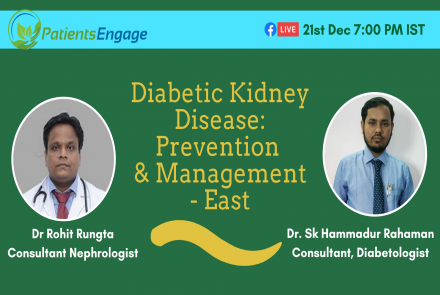
What is the connection between CKD and Diabetes
Diabetes is the leading cause of chronic kidney disease (CKD). Persistently high blood glucose damages the kidneys' filtering units (the glomeruli), causing albuminuria (protein in the urine) and a gradual decline in the filtration from kidneys (eGFR). By now we know that early CKD often has no symptoms, so people with diabetes should undergo regular screening with urine albumin-to-creatinine ratio (ACR) and eGFR. Early detection, along with optimal blood glucose and blood pressure control and kidney-protective medications such as ACE inhibitors/ARBs and SGLT2 inhibitors, can significantly slow disease progression and reduce the risk of kidney failure.
What is the connection between CKD and Heart Health
You will be surprised to know that chronic kidney disease is, in many ways, more of a heart disease than a kidney disease. At almost every stage, even with mild reductions in kidney function, the risk of a heart attack, stroke, or heart failure event is higher than the risk of ever needing dialysis. In fact, in one large study of older adults with moderate CKD, participants were roughly six times more likely to die of a cardiovascular cause than to progress to kidney failure (Nowak et al.). This happens because the declining kidney function allows sodium and fluid to be retained in the body which raises blood pressure, disturbs calcium-phosphate balance (leading to stiffening and calcification of blood vessels), and promotes chronic low-grade inflammation. All this collectively cause accelerated damage to the heart and arteries. Many cardiologists and nephrologists describe CKD and Cardiovascular disease as two faces of the same underlying problem rather than separate conditions.
It is important that if you have CKD, you must focus on protecting your heart through blood pressure control, cholesterol management, blood sugar control, and regular cardiovascular check-ups just as much as you focus on protecting your kidneys.
CKD and Blood Pressure
High blood pressure is both a cause and a result of chronic kidney disease (CKD). Persistently high blood pressure damages the kidneys' filtering units (glomeruli). The damaged kidneys are not able to regulate salt, water and hormones efficiently, which causes the blood pressure to rise further. This creates a vicious cycle that speeds up kidney damage. Controlling blood pressure is therefore one of the most effective ways to slow CKD progression and reduce the risk of heart attack, stroke, and kidney failure. ACE inhibitors or ARBs are often the preferred medications, particularly in people with albuminuria (protein in the urine), as they protect both the kidneys and the heart.
Intensive Blood Pressure Targets
To slow CKD progression and reduce cardiovascular events the focus is to aim for a systolic blood pressure <120 mmHg, when tolerated.
Chronic Kidney Disease (CKD) is often silent, and patients may be asymptomatic in the early stages which is precisely why screening high-risk groups (diabetes, hypertension, cardiovascular disease, obesity, family history) matters. The current symptom list can inadvertently reassure people who feel well but are already at risk namely:
- Persistent fatigue or weakness
- Swelling of the feet, ankles, legs, hands, or around the eyes
- Changes in urination: Urinating more often, especially at night (nocturia), urinating less than usual, foamy or bubbly urine (suggesting protein in the urine) and or blood in the urine
- Loss of appetite, nausea, or vomiting
- Metallic taste in the mouth or bad breath
- Persistent itching
- Muscle cramps, especially at night
- Difficulty concentrating, confusion, or poor memory
- Shortness of breath (due to fluid overload or anaemia)
- High blood pressure that is difficult to control
- Sleep disturbances
- Dry skin
- Unexplained weight loss
Are there any updates to Dietary Guidelines?
The 2024 update emphasizes more on how people with CKD should eat and not solely on how much protein or salt they consume. The older “one-size-fits-all” diet rules have changed, and the current guidance encourages individualised nutrition planning, ideally with a renal dietitian, so that that factors like age, frailty, and stage of CKD can be taken into consideration.
- Plant-forward, not plant-only: the guideline now recommends favouring plant-based foods over animal-based ones, and cutting back on ultra-processed foods, rather than a strict prescription-based diet. This doesn't mean everyone with CKD needs to turn vegetarian, it means concentrating your plate with more vegetables, legumes, and whole grains where possible.
- Protein, right-sized: for most adults with CKD stages 3–5, around 0.8 g of protein per kg body weight per day is the target, with high-protein diets (above 1.3 g/kg/day) discouraged for people at risk of disease progression. Older adults who are frail or losing muscle mass may need more protein and calories, not less.
- Sodium, age-adjusted: the general target is under 2 g of sodium (about 5 g of salt) per day, but the guideline is explicit that this should follow age-based recommended intakes rather than a generalized number for everyone. The “strict sodium restriction” is not appropriate for the patients with salt-wasting kidney disease.
Questions to Ask Your Nephrologist
Being better prepared with a short list of questions before your appointment can help you get more out of the consultation:
- Given my CKD, what is my cardiovascular risk, and do I need to see a cardiologist as well?
- What should be my blood pressure and cholesterol targets with my kidney function?
- Are all my current medications safe at my level of kidney function, and do any doses need adjusting?
- Would a medication like an SGLT2 inhibitor, an ACE inhibitor/ARB, help slow my kidney disease?
- Should I see a renal dietitian for a personalised eating plan?
- Are there specific foods or supplements I should avoid given my stage of CKD?
- How often should I get my kidney function checked?
- What are the red flags in case of which I should visit the hospital urgently?
References
- Grams, Morgan E., et al. “Estimated Glomerular Filtration Rate, Albuminuria, and Adverse Outcomes: An Individual-Participant Data Meta-Analysis.” JAMA, vol. 330, no. 13, 2023, pp. 1266–77.
- Kidney Disease: Improving Global Outcomes (KDIGO) CKD Work Group. “KDIGO 2024 Clinical Practice Guideline for the Evaluation and Management of Chronic Kidney Disease.” Kidney International, vol. 105, no. 4S, 2024, pp. S117–S314. KDIGO, kdigo.org/guidelines/ckd-evaluation-and-management/.
- “KDIGO 2024 Clinical Practice Guideline on Evaluation and Management of Chronic Kidney Disease: A Primer on What Pharmacists Need to Know.” American Journal of Health-System Pharmacy, vol. 82, no. 12, 2025, academic.oup.com/ajhp/article/82/12/660/8107680.
- Levin, Adeera, et al. “Executive Summary of the KDIGO 2024 Clinical Practice Guideline for the Evaluation and Management of Chronic Kidney Disease: Known Knowns and Known Unknowns.” Kidney International, vol. 105, no. 4, 2024, pp. 684–701.
- Torres Rodriguez, S., and M. Gautam. “The KDIGO CKD 2024 Guidelines Part 1: Evaluation and Risk Stratification.” NephJC, 2024, nephjc.com/news/kdigo-ckd-part1.
- “Chronic Kidney Disease: An Overview.” PatientsEngage, PatientsEngage Private Limited, 30 Mar. 2025, www.patientsengage.com/condition/chronic-kidney-disease. Accessed 9 July 2026.
- Kidney Disease: Improving Global Outcomes (KDIGO) CKD Work Group. "KDIGO 2024 Clinical Practice Guideline for the Evaluation and Management of Chronic Kidney Disease." Kidney International, vol. 105, no. 4, supplement, 2024, pp. S117–S314.
- Nowak, Kristen L., et al. "Chronic Kidney Disease and the Risk of End-Stage Renal Disease versus Death." Journal of General Internal Medicine, vol. 26, no. 4, 2011, pp. 379–385.
- Zoccali, Carmine, et al. "Cardiovascular Complications in Chronic Kidney Disease: A Review from the European Renal and Cardiovascular Medicine Working Group of the European Renal Association." Cardiovascular Research, vol. 119, no. 11, 2023, pp. 2017–2032.
- Kidney Disease: Improving Global Outcomes (KDIGO) CKD Work Group. KDIGO 2024 Clinical Practice Guideline for the Evaluation and Management of Chronic Kidney Disease. Kidney International, vol. 105, no. 4S, 2024, pp. S1–S150.
- American Diabetes Association Professional Practice Committee. "Chronic Kidney Disease and Risk Management: Standards of Care in Diabetes—2025." Diabetes Care, vol. 48, suppl. 1, 2025, pp. S289–S310.
- National Kidney Foundation. Diabetes and Chronic Kidney Disease. National Kidney Foundation, www.kidney.org/kidney-topics/diabetes-and-chronic-kidney-disease. Accessed 27 July 2026.
- Centers for Disease Control and Prevention. Chronic Kidney Disease and Diabetes. Centers for Disease Control and Prevention, www.cdc.gov/kidney-disease/about/diabetes.html. Accessed 27 July 2026.
Changed
21/Aug/2026
Condition