

Tamil Nadu resident R. Eswari, 54, talks about the lifestyle changes she made to keep diabetes under control.
What kind of diabetes are you suffering from?
Type 2 diabetes
When were you diagnosed?
I was then 35 years old.
Why did you get checked?
I was constantly feeling tired and had fainting episodes.
Is there a history of diabetes in your family?
Yes. My mother had Type 2 diabetes.
What is your present condition?
My diabetes is under control.
What medications are…

Despite being insulin-dependent, Jayesh Shah (54) continues to globe-trot for work. All it needs is a little extra planning, he says. Here, he shares his top tips for travelling safely with diabetes.
• Carry the doctor’s prescription with you
• Inform airport security that you are a diabetic
• When travelling across time zones, adjust your medication and food intake as per the time zone that you are currently in
• Do not skip any meals; over eating is better than fasting, especially during long layovers at airports and missed flights, to avoid possibility of low sugar
• Aisle seats help, especially if you need to use the washroom frequently; if travelling by road try and map out the distance between convenience stops
• Inform the flight attendants / fellow travellers about your diabetes condition if you are travelling alone
• Carry some snacks, candies, etc, in case your sugar drops
• If possible, check out the carbohydrate content and glycaemic index of the local cuisine
• Be careful about alcohol intake as this can cause fluctuations in blood sugar
• Do not feel shy to inform people around you, especially your co-workers, that you have diabetes
• If you are on insulin pump, and your time zone changes, adjust the clock gradually
• Do not skip your exercise routine
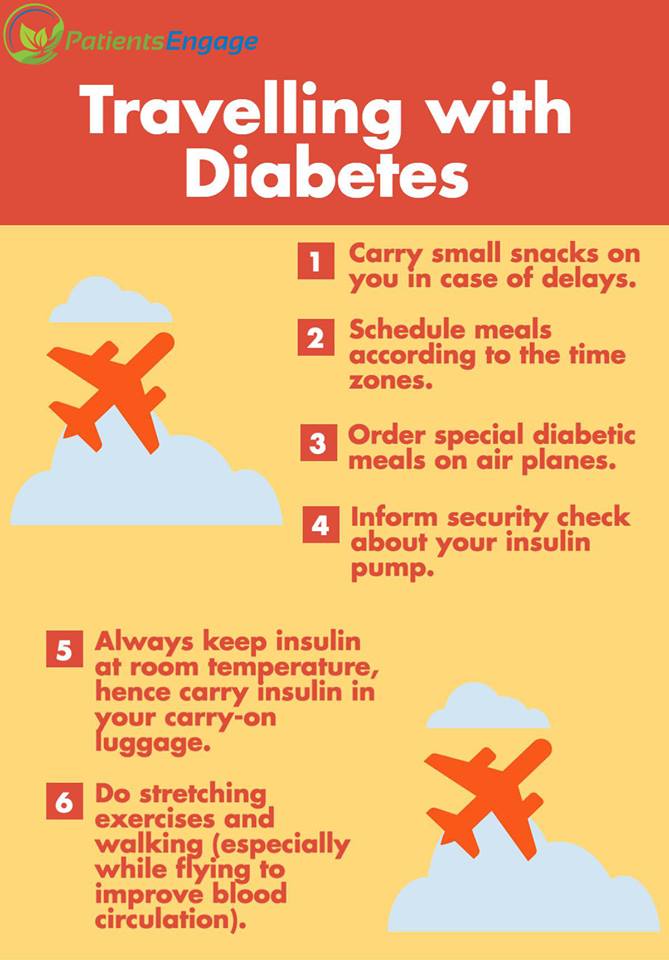
Diabetes related supplies are allowed on the plane. One can carry:
• Insulin & insulin pens, alcohol swabs and unlimited numbers of unused syringes
• Blood glucose meters, test strips and lancets
• Liquids (including water, juice, or liquid nutrition); you may face a challenge in explaining this to the security officers, but it is important to do so, especially on long-haul flights.
Carry a doctor’s note describing your condition and the need for carrying liquids.
Changed
10/Jul/2019
Community
Condition