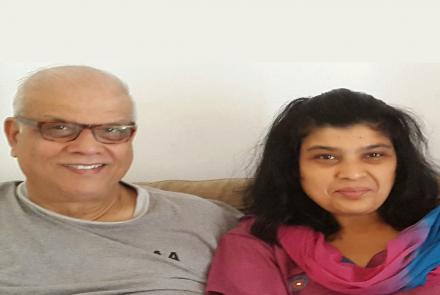

A hapless woman, abandoned by her husband and wracked by a challenging mental illness called Schizophrenia, Bano is the story of immense effort to overcome the travails and the invaluable role of a supportive family in the rehabilitation process.
Bano (not her real name) is 28 and her story began almost a decade ago. The youngest of eight children, Bano completed secondary schooling but didn’t pursue her education after that. Her four elder sisters and three elder brothers are married and…

This article by Dr. Shivam Gupta, Senior Consultant Psychiatrist breaks up the components of Emergency Psychiatric treatment, what it entails and what are the points to keep in mind, before admission to a facility and after an admission as well.
What is emergency psychiatric care?
Emergency psychiatric care is urgent medical help given to someone experiencing a severe mental health crisis where they may be at risk of harming themselves, others, or are unable to cope or function normally. Situations such as thoughts of self-harm such as suicidal ideations, extreme confusion as seen in persons suffering from dementia, aggression, severe anxiety, or losing touch with reality as seen in conditions like Schizophrenia may require this type of care. The immediate focus is to ensure the person’s safety, calm them down through support or medication if needed, and identify possible causes, whether psychological, physical, or related to substance use. Based on the assessment, doctors then decide whether the person can go home with support or needs hospital admission. Overall, the goal of emergency psychiatric care is to stabilize the individual, reduce distress, and connect them to appropriate ongoing treatment.
Related Reading: How to prepare for Medical Emergency at Home
What is the most common mode of seeking help - a phone call in distress or do people land up?
For our organisation, it is usually in the form of a video session, although a lot of clients are present physically as well. Phone calls in distress are also common. People reaching out in emergencies is more common than believed to be but more awareness is needed.
What is usually the age bracket of people reaching out for help?
Younger age groups from 18-35 years reach out more frequently, but people of all ages do reach out for help.
What is a typical scenario of any person in need of emergency psychiatry care, if there is one, for our understanding?
A typical scenario entails a person with suicidal ideations trying to reach out for help for reduction of distress and these ideations. A lot of times, these are associated with episodes of self harm.
How effective is online therapy? Do you recommend it?
The preference for therapy is definitely offline but it possesses a lot of logistic challenges due to higher frequency of therapy sessions. In that case, online therapy is a boon for such logistic challenges and emerges as an effective alternative.
What does a 24/7 support for people in need of immediate assistance involve, as Amaha says it provides?
A 24/7 support ideally involves round the clock availability of a therapist or a psychiatrist for de-escalation of immediate risk.
Logistics after Admissions:
What paperwork/ release forms may the patients need?
The patients are required to carry a valid ID proof like Aadhar card, passport etc in case of a voluntary admission. They need to sign the consent form before admission. In case of a supported admission, an application is required from the caregivers stating the reason for consideration of a supported admission which is then assessed by the psychiatrist. Emergency contact details of family members are also required and health insurance details, in case they plan to apply for a claim.
Which relatives/ friends/ neighbours can contact them in case someone is agitated (assume patient would not cooperate)?
There is a provision of nominated representatives in the law. Anyone can identify a close relative or even a friend as their nominated representative to make their treatment decisions for them if they lose the capacity to make their own decisions. In case, no nominated representative the 1st preference goes to the spouse or the parent or siblings. In case they are not available then a relative or a caregiver can also step in and contact the mental health establishment. It is to note that the treatment decision goes back to the patient once they regain the capacity to make their decisions.
What should be carried along for admitting - paper work, clothes, etc?
It is recommended that they carry their clothes and a valid ID. Other essentials are generally provided by the establishment. In case of admission to a government facility, they are recommended to carry toiletries as well.
Is insurance coverage available or not?
According to the Mental Healthcare Act 2017, insurance coverage is now available at mental health establishments.
Magnitude of costs involved
In a private setup, the costs may vary from 10000 to up to 40000 per day depending on the comfort level of the room opted. These costs are significantly lower in a government setup and may be even nil.
What does the attendant with the patient need to bring and can the person stay with the patient or is the attendant required to stay? Can a personal attendant be hired as support?
Usually, it is not required for the attendant to stay with the patient but there may be circumstances or logistic difficulties which may necessitate the attendant to stay with the patient. They may also need to bring along a change of clothes. Even when they are not required to stay with the patient, they should be in touch for the patient's history of illness which may aid in the patient’s recovery and to discuss the treatment plans. A personal attendant may also be hired for support.
Has the admission procedure been made particularly patient-friendly for emergency cases? Please share the details
The admission procedure is patient friendly with no lengthy forms being mandated to be filled by the patient and most of the paperwork is taken care of by the establishment itself. The patient is greeted by a courteous and empathetic staff and is immediately received by a doctor stationed in- house, minimising the waiting time.
This article has been contributed by Dr. Shivam Gupta, Senior Consultant Psychiatrist at Amaha Mental Health Hospital
Changed
19/Apr/2026
Community
Condition