  • Cancer

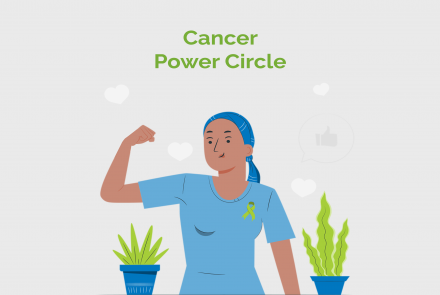
    This Community will address questions and discussions on all forms of Cancer. We will support each other - patients and caregivers in their journey  

  • Poster announcing PARC Cohort 2025
    Announcing the PARC 2025 cohort!
    Are you passionate about improving access to research, fostering better care and creating a positive impact on clinical trials and guidelines for cancer? Apply to PARC (Patient Advocate Research and Clinical Guidelines) Training Program) 2025 now. What is the PARC (Patient Advocate Research and Clinical Guidelines) Training Program The National Cancer Grid and PatientsEngage are collaborating to build a team of Patient Advocates to work towards advancing patient and public involvement in…
  • A young woman, rare sarcoma rhabdomyosarcoma survivor in an outdoor setting and the text overlay I now support lung cancer patients
    A Rare Cancer Survivor Now Supports Lung Cancer Patients
    Suchismita Das was an Engineering undergraduate when the diagnosis of a rare soft tissue sarcoma (rhabdomyosarcoma, a rare cancer) in the lung, hit her like a bolt from the blue and turned her world upside down. She fought it out bravely and now she is helping others who going through lung cancer. I am Suchismita Das, 28 years old, and a rare soft tissue sarcoma survivor. My life was just like any other girl studying engineering till I started facing health issues. What were your early symptoms…
  • Brain Tumor Prevention
    Prevention of Brain Tumour
    Prevention of Brain Tumours: We cannot prevent brain tumours/cancer, but we can reduce our risk of having them. Like any other cancer, brain cancer risk can also be reduced by: Avoid/Limit your exposure to Harmful Substances The toxins in our environment and pollutants can have unfavourable effects on the brain. Pesticides, industrial chemicals, and air and water pollutants, and even indoor pollutants are known to contribute to the development of brain tumours as per the scientific literature.…
  • Brain Tumor Management
    Management of Brain Tumour
    Management of Brain Tumour Role of palliative care: Palliative care helps in improving the quality of life of not just the patient but the families and caregivers of patients with cancer. It has many roles: Symptom Management: Palliative care helps to mitigate and manage many symptoms due to cancer and the related treatment like pain, nausea, fatigue, loss of appetite, and breathlessness. It combines several modalities like use of medications, physiotherapy, counselling etc. Emotional and…
  • Brain Tumor Treatments
    Treatment of Brain Tumour and Brain Cancers
    Treatment for brain tumour and brain cancer: The treatment plan is usually decided based on the physical assessment of the patient, age, advice of the Neuro-oncologist (specialist for brain cancer) and the oncology team or Neurosurgeon (if the brain tumour is benign) and is usually based on factors like: Type of Tumour: Depends on whether the tumour is cancerous or benign, and the specific type of tumour. Grade of tumour: Tumours may range from low-grade to high-grade and the…
  • Brain Tumor Tests Diagnosis
    Tests and Diagnosis of Brain Tumour
    Brain Tumour Diagnosis Process : Initially the doctor (typically a neurologist) will take a detailed history to understand the duration and intensity of the symptoms. They may inquire about past and current health issues, current and past medications, surgical and family history etc. This will be followed by a general physical exam and a neurological examination (neurocognitive and neuro-ophthalmological) to check for: Balance and coordination. Mental status/Awareness/Ability to follow simple…
  • Brain Tumor Types and Grades
    Types and Grading of Brain Tumour
    Types of Brain Tumour: Primary and Secondary Malignant and Benign Primary and Secondary Tumours that start in the brain tissue itself are known as primary brain tumours. Primary tumours are further categorized by clinicians as glial (composed of glial cells in the brain) or non-glial (developed on the brain or the structures of the brain like nerves, blood vessels, and glands). If the tumour has started elsewhere in the body and then spread to the brain; it is termed as secondary brain…
  • Brain Tumor Signs Symptoms
    Symptoms of Brain Tumour
    Symptoms of Brain Tumour: Headache or a feeling of pressure in the head that is: Worse in the morning. Persistent or frequent and seem severe. Feel like tension headaches or migraines. May be associated with nausea and/or vomiting. Issues with vision like blurring, double vision, or diminishing sight on the sides (peripheral vision). Loss of sensation or movement in the legs or arms. Issues with balance. Speech issues like slurring, incoherent speech. Excess tiredness. Confusion in matters…
  • Brain Tumor Causes Risk Factors
    Causes and Risk Factors of Brain Tumour
    Causes of Brain Tumour: For most brain tumours, the cause is not known. Genetics are associated with less than 5% of brain tumours, these are rare conditions passed down in families, where certain genes are mutated from birth, significantly increasing the risk of developing brain and other types of tumours. Some inherited conditions are known to increase the risk of developing tumours which are: Neurofibromatosis- Causes tumours on nerves throughout the body, including the brain and spinal…
  • Brain Tumor Overview
    Overview of Brain Tumour and Brain Cancer
    Brain and spinal cord together are known as the central nervous system (CNS). Brain tumour is an overgrowth of cells, either within the brain or near it in places like nerves, the pituitary gland, and the meninges (sheet like membranes that cover the surface of the brain). Tumours can be benign (non-cancerous growth or lumps that generally do not spread to other organs/tissues) or malignant (made up of cancerous cells that multiply and spread to neighbouring tissues and organs and sometimes…
This study compared the outcome of low-dose rate brachytherapy (LDR-BT) and image-guided intensity-modulated radiotherapy (IG-IMRT) for localized prostate cancer of different severities. With/ without External Beam RadioTherapy.  Five year…
While this is not definitive and it is a small sample size, its still a strong indicator. Its also worrying that those who chose alternatives tended to be younger women with more education and more money  https://www.nbcnews.com/health/health-…
Do you struggle to get accepted back at work? Do you struggle with little issues like going out with colleagues, work related travel, side effects of treatment, fatigue, anxiety? https://www.theguardian.com/commentisfree/2017/aug/14/dont-punish-…
My father aged 86 yrs is detected with AML. I find from net that lemon with baking soda prevents growth of cancer. Is that correct? At present he is undergoing chemo.  
Cancer brings in a lot of anxiety for the patient and for the family. What are some of the ways you coped with the anxiety?
I came upon these two articles and thought it is worth sharing them. What's been your experience? What would you recommend to people in this situation? It could be you, it could be your colleague. Do share your experience and thoughts
Whats been bothering you in the last week ? Did you have a happy event ? Would you like to share ?
This is such a difficult subject for so many mothers. Here is what Joan Lunden did ..What would you do ?  

Latest Communities

  • Youth Thalassemic Alliance
    Our Motto 1. To assist patients suffering from thalassemia in securing medical treatment, including hospitalization and…
  • Cancer
    This Community will address questions and discussions on all forms of Cancer. We will support each other - patients and…
  • Diversity and Disability
    Diversity and Disability
    Celebrate Life; Celebrate Diversity We welcome you to the community page "Celebrating Disability", an online discussion…