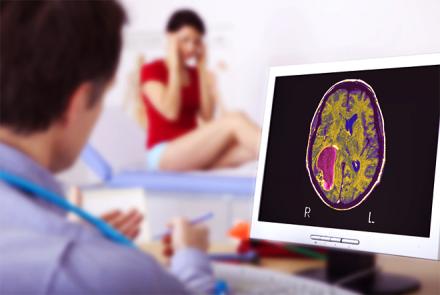

Brain tumour is an overgrowth of cells, either within the brain or near it in places like nerves, the pituitary gland, and the meninges Brain tumours can be benign (non-cancerous growth or lumps that generally do not spread to other organs/tissues) or malignant (made up of cancerous cells that multiply and spread to neighbouring tissues and organs and sometimes break away and spread to many organs in the body, a process called metastasis).
The prevalence of brain tumours is variable around the world and in India. Approximately 2% of all cancers are brain cancers. The incidence rate globally is approximately 6.2 per 100,000 people per year.
While brain tumours account for a relatively small percentage of overall cancer cases in India, they are a significant cause of mortality, with over 24,000 deaths reported each year.

Prevention of Brain Tumours:
We cannot prevent brain tumours/cancer, but we can reduce our risk of having them. Like any other cancer, brain cancer risk can also be reduced by:
Avoid/Limit your exposure to Harmful Substances
The toxins in our environment and pollutants can have unfavourable effects on the brain. Pesticides, industrial chemicals, and air and water pollutants, and even indoor pollutants are known to contribute to the development of brain tumours as per the scientific literature. Limiting our exposure to these harmful substances is helpful in reducing our risk.
Radiation and Electromagnetic Fields (EMFs)
All electronic devices emit radiation and electromagnetic fields, and their long-term effects are still being studied but some research does suggest a potential link between prolonged exposure to EMFs and an increased risk of brain tumours. We can attempt to minimize our exposure by using hands-free devices, reducing screen time, and maintaining a safe distance from electronic devices.
Good Nutrition
We are what we eat. The increasing prevalence of cross contamination of our food through soil with substances such as heavy metals and pesticides, can impact brain health. Choosing organic produce, limiting the consumption of processed foods, and being mindful of the source of fish (to avoid exposure to mercury) are helpful in protecting the brain health.
Regular Physical activity
Exercise helps us to maintain a healthy body weight which in turn helps to maintain the flow of blood to the brain thus promoting cognitive function and maintaining brain health.
Avoid smoking.
Smoking increases the risk of almost all cancers and is best avoided.
Lifestyle Modifications and Preventive Health checks for Higher Genetic Predisposition
People who have a higher genetic predisposition to cancer should be more mindful to adopt a healthy lifestyle. Prevention is always better and measures like regular health check-ups, leading a healthy lifestyle, eating nutritious diet, and reducing stress is helpful.
References:
- “American Brain Tumor Association.” American Brain Tumor Association, 2018, www.abta.org/.
- Bhandari, Virendra, et al. “Survival and Analysis of Patients with Various Central Nervous Tumors Who Received Post-Operative Radiation Therapy: A Retrospective Study.” IP Indian Journal of Neurosciences, vol. 9, no. 4, 15 Dec. 2023, pp. 209–213, www.ijnonline.org/html-article/20675, https://doi.org/10.18231/j.ijn.2023.041. Accessed 25 June 2025.
- “Brain Tumor Prevention – a Primer on Reducing Your Risk.” American Oncology Institute, www.americanoncology.com/blogs/brain-tumor-prevention-a-primer-on-reduc….
- cancer, Canadian Cancer Society / Société canadienne du. “Targeted Therapy for Brain and Spinal Cord Tumours.” Canadian Cancer Society, cancer.ca/en/cancer-information/cancer-types/brain-and-spinal-cord/treatment/targeted-therapy.
- Cleveland Clinic. “Brain Cancer & Brain Tumor: Symptoms, Causes & Treatments.” Cleveland Clinic, 2 June 2022, my.clevelandclinic.org/health/diseases/6149-brain-cancer-brain-tumor.
- Dr Colin Tidy. “Space-Occupying Lesions of the Brain.” Patient.info, 2 Dec. 2016, patient.info/doctor/space-occupying-lesions-of-the-brain.
- “How Common Is a Brain Tumor.” Tisch Brain Tumor Center, 26 June 2024, tischbraintumorcenter.duke.edu/blog/how-common-brain-tumor.
- Jalali, Rakesh, et al. “Indian Data on Central Nervous Tumors: A Summary of Published Work.” South Asian Journal of Cancer, vol. 5, no. 3, 2016, p. 147, https://doi.org/10.4103/2278-330x.187589. Accessed 1 Dec. 2019.
- Johns Hopkins Medicine. “Brain Tumors and Brain Cancer.” Www.hopkinsmedicine.org, 2022, www.hopkinsmedicine.org/health/conditions-and-diseases/brain-tumor.
- Mayo Clinic. “Brain Tumor - Diagnosis and Treatment - Mayo Clinic.” Mayoclinic.org, Mayo Clinic, 2019, www.mayoclinic.org/diseases-conditions/brain-tumor/diagnosis-treatment/….
- “Brain Tumor - Symptoms and Causes.” Mayo Clinic, 21 Apr. 2023, www.mayoclinic.org/diseases-conditions/brain-tumor/symptoms-causes/syc-….
- “National Brain Tumor Society.” National Brain Tumor Society, 2020, braintumor.org/.
- National Cancer Institute. “Brain Tumors.” National Cancer Institute, Cancer.gov, 2019, www.cancer.gov/types/brain.
- “Tips to Lower Brain Tumor Risk and Protect Your Health.” Medanta - the Medicity, 2025, www.medanta.org/patient-education-blog/how-to-lower-risk-from-brain-tum….
- “WHO Classification of Tumours Online.” Tumourclassification.iarc.who.int, tumourclassification.iarc.who.int/welcome/#.
- American Cancer Society. “What Is Palliative Care? | Symptom Management for Cancer.” Www.cancer.org, 25 Aug. 2023, www.cancer.org/cancer/managing-cancer/palliative-care/what-is-palliativ….
- Tan, Irena, and Kavitha Ramchandran. “The Role of Palliative Care in the Management of Patients with Lung Cancer.” Lung Cancer Management, vol. 9, no. 4, 29 July 2020, p. LMT39, https://doi.org/10.2217/lmt-2020-0016.
Changed
08/Jun/2026
Community
Condition