Cataracts, including congenital cataracts are relatively common in India. According to World Health Organisation (WHO), cataracts are a leading cause of blindness and visual impairment in India. It is estimated that >50% of the blindness cases in India are caused by cataracts. Cataracts can affect people of all age groups, but they are most commonly associated with aging, especially after the age of 50. However, cataracts can also occur in younger age groups, including children and middle-aged adults. Congenital cataracts, are present at birth or develop shortly after birth during infancy.
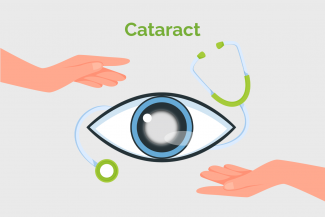
Cataract refers to a clouding of the lens in the eye leading to decreased vision. The lens is normally clear and helps focus light onto the retina at the back of the eye allowing us to see clearly. However, when a cataract develops, the lens becomes cloudy resulting in blurred or distorted vision.
Cataracts can develop in one or both eyes, but it's not necessary for both eyes to be affected simultaneously. It is possible for a cataract to develop in one eye and not the other, or for one eye to develop a cataract before the other. The timing and severity of cataract development can vary from person to person.
Cataracts, including congenital cataracts are relatively common in India and are a leading cause of blindness and visual impairment in India. WHO estimates that >50% of the blindness cases in India are caused by cataracts1. Other studies2-4 have reported that 50-80% of the bilateral blindness in India is caused by cataract.
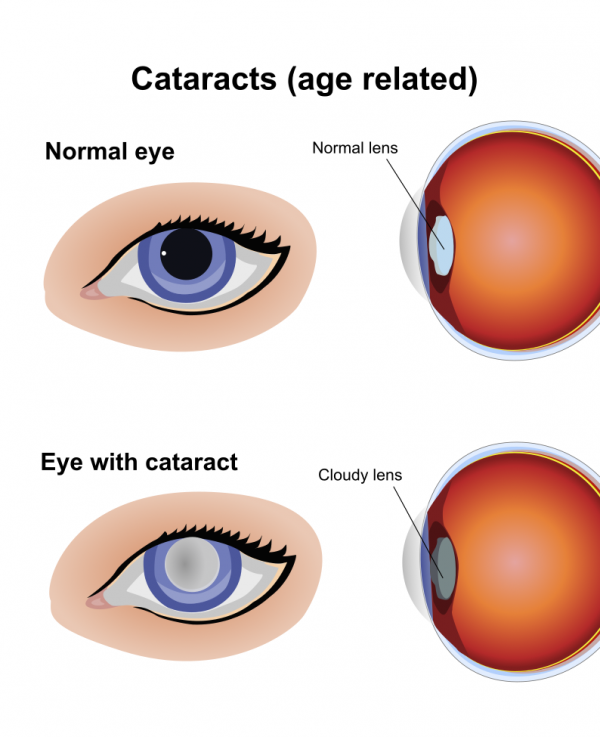
Cataracts can affect people of all age groups, but they are most commonly associated with aging. Age-related cataracts tend to develop gradually over time and are more prevalent in older adults. The risk of developing cataracts increases with advancing age. However, cataracts can also occur in younger age groups, including children and middle-aged adults. Congenital cataracts, are present at birth or develop shortly after birth during infancy. They affect a small percentage of newborns and young children.
References
1. World Health Organization. Global initiative for the elimination of avoidable blindness: An
informal consultation. WHO/PBL/97.61. Geneva: WHO; 1997.
2. Thulasiraj RD, Nirmalan PK, Ramakrishnan R, Krishandas R, Manimekalai TK, Baburajan
NP, et al. Blindness and Vision Impairment in a Rural South Indian Population: The Aravind
Comprehensive Eye Survey. Ophthalmology 2003;110:1491-8.
3. Murthy GV, Gupta S, Ellwein LB, Munoz SR, Bachani D, Dada VK. A Population-based Eye
Survey of Older Adults in a Rural District of Rajasthan: I, Central Vision Impairment,
Blindness and Cataract Surgery. Ophthalmology 2001;108:679-85.
4. Mohan M. Collaborative Study on Blindness (1971-1974): A report. New Delhi, India: Indian
Council of Medical Research; 1987. p. 1-65.
Contributed by
Dr Rashmi Deshmukh,

Consultant Ophthalmologist, Cataract, Laser Refractive Surgery (LASIK)
L V Prasad Eye Institute
Changed
08/Apr/2025
Community
Condition