Submitted by PatientsEngage on 3 April 2018
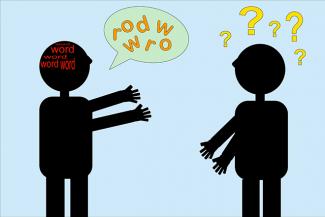
Image: Stock image of two people communicating with each other but the words in the speech bubbles are jumbled

After a stroke nearly 20-40 per cent patients develop communication problems or aphasia, the inability to comprehend and formulate language because of damage to specific language areas in the brain. Dr Sujata Gandhi, Speech Therapist, Nanavati Hospital, advises that speech and language therapy is the best way to restore normalcy and quality of life.

How does a stroke or ‘brain attack’ affect speech and communication?

A stroke causes damage to the Speech and Language areas of the brain. For most people, these are parts of the Left Hemisphere of the brain. Aphasia occurs suddenly often as a result of a stroke or head injury but may develop slowly in case of a brain tumour.

What happens when a stroke affects speech?

The difficulties of people with aphasia range from occasional trouble finding words to losing the ability to understand, speak, read or write. Intelligence, however, is not affected. Aphasia may occur with speech disorders such as Apraxia or Dysarthria.

Listen to a stroke survivor talk about her recovery from global aphasia


What is Aphasia?

Aphasia is a Communication disorder. It is the inability to comprehend and formulate language because of damage to specific language areas in the brain.

What causes Aphasia?

  1. Stroke
  2. Brain Tumours
  3. Brain Infections
  4. Head Injuries
  5. Dementia

What are the symptoms of Aphasia?

Main symptoms are:

  • Trouble to speak or slurring in speech.
  • Struggling with finding correct words or terms.
  • Using strange or inappropriate words.
  • Inability to comprehend Speech.
  • Difficulty in reading and writing.

What per cent of stroke survivors are affected by Aphasia?

According to the National Aphasia Association, 20-40% of stroke survivors have Aphasia.

Are there different types of Aphasia?

  1. Expressive / Non Fluent / Broca's Aphasia - Expression in form of speech or writing is affected.
  2. Comprehension / Fluent / Wernicke's Aphasia - Person cannot understand commands, spoken words. Their speech remains fluent. His answers will not connect to the questions.
  3. Global Aphasia - This affects all aspects of language. Both comprehension and expression are affected.
  4. Anomic Aphasia - Person has difficulty in naming objects.

How is Aphasia treated?

Speech and Language Therapy is the most essential and common treatment for Aphasia.

Can speech be recovered after a stroke?

Speech and language can be restored by Therapy. It depends on the extent of damage to the areas in the brain. Generally, therapy gives good results except in Global Aphasia where prognosis is poor.

Related Reading: Healing the mind after a Stroke

What does speech and language therapy involve?

Speech and Language Therapy involves in bridging the communication deficit. The patient needs to attend Speech Therapy sessions which may range from half hour to forty five minutes twice a week or more frequently. Regular sessions and follow up at home with the family members results in good prognosis.

What the general guidelines for communicating with people with Aphasia?

  1. Family members should understand the problem that the patience faces.
  2. Respect the patient’s age - do not treat or speak to them like a child.
  3. Do not ridicule or laugh at the errors or mistakes that they make.
  4. Speak slowly and clearly. Do not shout.
  5. Be patient and encouraging.


Dr Sujata Gandhi, Speech Therapist, Nanavati Hospital,

Changed
08/Jun/2026

Stories

  • Stanford Medicine: Arts and Humanities in Medicine
    The world of medicine is beginning to increasingly acknowledge the potential of expressive arts therapies such as art, music, drama, dance/movement, poetry/creative writing and play in the context of healing, treatment, psychotherapy, counselling and rehabilitation. Activities such as drawing, drumming, creative movement and play acting allow individuals of all ages to express deep-seated thoughts and feelings, improve physical, mental and emotional well-being and boost self-esteem and…
  • Dos and Don'ts of communicating with a person with Dementia
    Communicating with a person with dementia can be quite a challenge. There are some tips that can definitely help get the attention of the person and not agitate them. Here are some Dos and Don'ts. DO's DON'Ts Approach from the front, make eye contact and introduce yourself if necessary Don’t wave hand while talking as person’s attention could be distracted Speak slowly, calmly and use a friendly facial expression Don’t talk too fast or shout. Shouting out could have negative effect…
  • Simple Tips for Caregivers of Persons with Dementia!
    Tips for Caregivers Dementia is a general term for decline in a person's mental ability that is severe enough to interfere with his/her daily life. It may involvememory loss, difficulties with thinking, problem-solving or language. Dementia is progressive, which means the symptoms will gradually get worse. Even though most cases of dementia come from irreversible causes, there is still much that families can do to help their loved ones continue to function as well as possible for as…
  • Picture of meat, fish, eggs and cheese
    White Meat vs Red Meat: Which is Healthier?
    Is it true that red meat should be avoided, while white meat encouraged? Bonnie Lau, an Australian-trained dietitian, answers. Here, we compare the pros and cons of both and helps you decide which type of meat you should eat in the future. Meat is a great source of protein and lots of vitamins and minerals. But there are claims that red meat (mutton, lamb, beef, pork) should generally be avoided, while white meat (chicken, duck, fish) is encouraged. We look at this closer and compare pros and…
  • Never Too Old to Sing
    The Choir of the Loaves and Fish, a musical ensemble of senior citizens, started by Pervin Varma with Regina Thomas in Bengaluru has been immensely therapeutic for the elderly and has helped bring loads of warmth and sunshine into their lives. Picture above: Ammachy taking a bow with Pervin Varma Imagine a group of people – all senior citizens between 65 and 96 – people who have suffered strokes or are living with cancer, arthritis, heart disease, dementia, physical disabilities, people with…
  • How to cope when your Spouse has Dementia
    Amrita Patil Pimpale, Dementia Care Consultant, lists out 5 things you can do to help your spouse/partner who has been recently diagnosed with dementia. Most people with dementia undergo behavioral changes during the course of the disease. They gradually lose their mental faculties and become confused and vulnerable. They tend to forget things that have happened quite recently, but may seem to have clear memory of things that happened a long time ago. They will experience mood changes, can…
  • My Mother’s Hairdresser: Dementia friendly or not?
    A touching account of how a local hairdresser volunteered to help, when others refused, to give my mother, who lived with Young Onset Alzheimer's, a glam haircut and made her look uber cool in her final years.   They say it takes a village to raise a child. As caregivers, we realize that it takes an entire community to deal with Alzheimer’s. Extended family members, friends, neighbors, healthcare professionals, coworkers, employers, employees, service providers like household help,…
  • Profile picture of Daksha Bhat, a dementia information advocate in a green top
    5 Challenges of Dementia Care in Gujarat
    Dementia is difficult. Absence of diagnosis, counselling and support makes matters worse. Basic awareness and services can help decrease caregiver stress. Daksha Bhat of Varishta analyses the situation on dementia care in Gujarat. Dementia may start as a slow, creeping change that gradually makes its inroads into our lives. It can happen to anybody who is over 60. Beginning with a gradual decline in the capacity to recall important things, it gradually manifests as a slow deterioration in the…
  • Journey from Negative to Positive through Dance Movement Therapy
    Restoring self-esteem and self-worth is what Dance Movement Therapy by Renelle Snelleksz has successfully achieved for a cross section of people like people with Parkinson’s Disease or those with a history of physical abuse and even children who have survived cancer but are deeply scarred. What is Dance Movement Therapy? How is it different from learning Dance? Dance Movement Therapy (DMT) is very different from technique-based dance in that it creates a safe and non-judgemental space for…
  • Speech and Hearing Disorders in an Aging Population
    Dr S.P. Goswami, Professor of Speech Pathology at Mysore counsels that with the right kind of support, the load of the communication disorder can be shared equally by the aged individual as well as the family, the key to it being to meet them halfway. Aging is a phenomenon which starts from birth and brings about changes in the individual across the life span. However, beyond the yardstick of 60 years, anatomical and physiological changes become highly evident in the human body, thereby leading…