Submitted by PatientsEngage on 3 April 2018
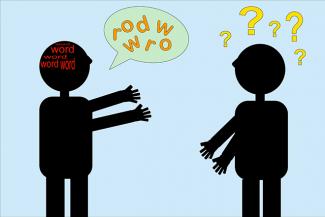
Image: Stock image of two people communicating with each other but the words in the speech bubbles are jumbled

After a stroke nearly 20-40 per cent patients develop communication problems or aphasia, the inability to comprehend and formulate language because of damage to specific language areas in the brain. Dr Sujata Gandhi, Speech Therapist, Nanavati Hospital, advises that speech and language therapy is the best way to restore normalcy and quality of life.

How does a stroke or ‘brain attack’ affect speech and communication?

A stroke causes damage to the Speech and Language areas of the brain. For most people, these are parts of the Left Hemisphere of the brain. Aphasia occurs suddenly often as a result of a stroke or head injury but may develop slowly in case of a brain tumour.

What happens when a stroke affects speech?

The difficulties of people with aphasia range from occasional trouble finding words to losing the ability to understand, speak, read or write. Intelligence, however, is not affected. Aphasia may occur with speech disorders such as Apraxia or Dysarthria.

Listen to a stroke survivor talk about her recovery from global aphasia


What is Aphasia?

Aphasia is a Communication disorder. It is the inability to comprehend and formulate language because of damage to specific language areas in the brain.

What causes Aphasia?

  1. Stroke
  2. Brain Tumours
  3. Brain Infections
  4. Head Injuries
  5. Dementia

What are the symptoms of Aphasia?

Main symptoms are:

  • Trouble to speak or slurring in speech.
  • Struggling with finding correct words or terms.
  • Using strange or inappropriate words.
  • Inability to comprehend Speech.
  • Difficulty in reading and writing.

What per cent of stroke survivors are affected by Aphasia?

According to the National Aphasia Association, 20-40% of stroke survivors have Aphasia.

Are there different types of Aphasia?

  1. Expressive / Non Fluent / Broca's Aphasia - Expression in form of speech or writing is affected.
  2. Comprehension / Fluent / Wernicke's Aphasia - Person cannot understand commands, spoken words. Their speech remains fluent. His answers will not connect to the questions.
  3. Global Aphasia - This affects all aspects of language. Both comprehension and expression are affected.
  4. Anomic Aphasia - Person has difficulty in naming objects.

How is Aphasia treated?

Speech and Language Therapy is the most essential and common treatment for Aphasia.

Can speech be recovered after a stroke?

Speech and language can be restored by Therapy. It depends on the extent of damage to the areas in the brain. Generally, therapy gives good results except in Global Aphasia where prognosis is poor.

Related Reading: Healing the mind after a Stroke

What does speech and language therapy involve?

Speech and Language Therapy involves in bridging the communication deficit. The patient needs to attend Speech Therapy sessions which may range from half hour to forty five minutes twice a week or more frequently. Regular sessions and follow up at home with the family members results in good prognosis.

What the general guidelines for communicating with people with Aphasia?

  1. Family members should understand the problem that the patience faces.
  2. Respect the patient’s age - do not treat or speak to them like a child.
  3. Do not ridicule or laugh at the errors or mistakes that they make.
  4. Speak slowly and clearly. Do not shout.
  5. Be patient and encouraging.


Dr Sujata Gandhi, Speech Therapist, Nanavati Hospital,

Changed
08/Jun/2026

Stories

  • People with dementia should continue to live with respect and dignity in the community
    Jason Foo, the CEO of ADA (Alzheimer’s Disease Association), Singapore, shares his views on the rising levels of the disease, how personalised treatment can help and also how spreading awareness can remove the existing stigma. What are the possible reasons for increase in Young onset dementia? (Is there a difference between Young onset dementia and early onset dementia?) Young Onset Dementia (YOD) and Early Onset Dementia (EOD) refer to the same condition which is dementia affecting people…
  • Stock pic of person with dementia and caregiver and overlay text what dementia caregivers must understand
    What Caregivers Of Persons With Dementia Must Understand For More Effective Care
    Dementia care is difficult. Caregivers have to be persistent and creative to make the ongoing adjustments required. Swapna Kishore discusses some important aspects that caregivers must understand and accept, and offers some tips to cope better. It is often assumed that family caregivers will be able to support their loved ones after dementia care is explained to them. But hearing about dementia symptoms or communication methods in a classroom is not enough to make family caregivers give better…
  • Why do we need Dementia Friendly Communities
    Dr. Sridhar Vaitheswaran explains how supporting a person with dementia effectively in a dementia friendly community can improve not only their wellbeing but also improve caregiver satisfaction, decrease burden and contribute to the society’s progress.  The story of Mr Arun Mr Arun is a seventy-year old retired government employee. He lives with his wife, son, daughter-in-law and two grandchildren in Chennai. He helps with the chores such as shopping and paying bills. He also visits a…
  • Empathy will bring out Best Care for Person with Dementia
    Amrita Patil Pimpale, a qualified Dementia Care Trainer and Founder of Echoing Healthy Ageing, a social enterprise working in Dementia care sector, provides consultation and training for families and healthcare professionals in order to sensitize them to care for elderly with dementia. Here she advocates methods on how to improve quality of life for dementia patients and their caregivers. As a dementia caregiver consultant, what are the tips and advice that you give caregivers to facilitate…
  • Remember Me - The Unheard Cry for Help
    Every three seconds one person in the world develops dementia. Dr Amit Dias, an epidemiologist and geriatrician who is one of the leaders of  the dementia awareness movement in India, throws light on ADI’s ‘Remember Me’ campaign as the World observes the Alzheimer’s Awareness month in September. What does the ‘Remember Me’ campaign mean to you? ‘Remember Me’ is a global campaign initiated by Alzheimer’s Disease International (ADI), UK that reminds me that I need to step up my efforts…
  • An elderly person on a wheelchair looking out to the lake with a male caregiver standing next to him
    20 Tips For Handling Hospital Stays and Medical Emergencies
    Sangeeta is a blogger who instills rare insight into her role of a caregiver. She not only chronicles the various methods which work for her father, who has Parkinson's, Dementia and Diplopia, but she backs it up with profound logic and common sense. The best part of her blog is her all-pervading humour which gives such a bitter sweet taste to her snippets of caregiving. Here are her top tips for handling medical emergencies and hospital stays.  My father  Anna was in a hospital for…
  • Fall Proofing the Home for Older Adults
    Falls are probably the number one cause of injuries in seniors resulting in high medical and rehabilitative costs. Porrselvi A.P. a cognitive and psychosocial interventions specialist, offers valuable tips and suggestions for preventing falls at home, from installing handrails and anti-skid mats to decluttering the house and wearing sturdy footwear. Falls can lead to avoidable hospital admissions and the associated complications for elderly with a good health status as well as those older…
  • Coping with Difficult Dementia Behaviours
    The most effective way to manage difficult behaviours in dementia and keep stress at bay for family, friends and caregivers is acceptance, patience and calmness, recommends Porrselvi A.P. a cognitive and psychosocial interventions specialist. Many people with dementia undergo changes in behaviour during the course of the disease. These changes are unexpected, awkward, difficult to understand and are termed problem or deviant behaviour.  These sudden behavioural changes can be challenging…
  • Advanced Parkinson’s Stage
    As Parkinson’s progresses, your symptoms might also change. Your current symptoms might become more severe, and new symptoms might also develop. You may feel that the medication may not be as effective in controlling the symptoms as they were before as a result you may find that you require help from others to do your routine activities like dressing, eating, bathing etc. Certain symptoms like poor balance, difficulty walking and fear of falling may prevent you from being able to leave our…
  • Dementia Friendly Communities are essential to offer societal support to those affected
    Dr Sudhir Kumar, a consultant with specialisation in old age psychiatry and neuropsychiatric disorders discusses his views on the importance of Dementia Friendly Communities (DFCs) and how India needs to work more towards it Dementia-friendly communities help people with dementia feel included and supported in the day to day surrounding – the places they work, live and play  A dementia-friendly community focuses on spreading awareness about dementia and providing a safe and supportive…