Submitted by PatientsEngage on 3 April 2018
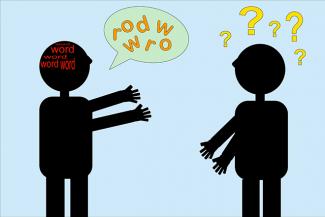
Image: Stock image of two people communicating with each other but the words in the speech bubbles are jumbled

After a stroke nearly 20-40 per cent patients develop communication problems or aphasia, the inability to comprehend and formulate language because of damage to specific language areas in the brain. Dr Sujata Gandhi, Speech Therapist, Nanavati Hospital, advises that speech and language therapy is the best way to restore normalcy and quality of life.

How does a stroke or ‘brain attack’ affect speech and communication?

A stroke causes damage to the Speech and Language areas of the brain. For most people, these are parts of the Left Hemisphere of the brain. Aphasia occurs suddenly often as a result of a stroke or head injury but may develop slowly in case of a brain tumour.

What happens when a stroke affects speech?

The difficulties of people with aphasia range from occasional trouble finding words to losing the ability to understand, speak, read or write. Intelligence, however, is not affected. Aphasia may occur with speech disorders such as Apraxia or Dysarthria.

Listen to a stroke survivor talk about her recovery from global aphasia


What is Aphasia?

Aphasia is a Communication disorder. It is the inability to comprehend and formulate language because of damage to specific language areas in the brain.

What causes Aphasia?

  1. Stroke
  2. Brain Tumours
  3. Brain Infections
  4. Head Injuries
  5. Dementia

What are the symptoms of Aphasia?

Main symptoms are:

  • Trouble to speak or slurring in speech.
  • Struggling with finding correct words or terms.
  • Using strange or inappropriate words.
  • Inability to comprehend Speech.
  • Difficulty in reading and writing.

What per cent of stroke survivors are affected by Aphasia?

According to the National Aphasia Association, 20-40% of stroke survivors have Aphasia.

Are there different types of Aphasia?

  1. Expressive / Non Fluent / Broca's Aphasia - Expression in form of speech or writing is affected.
  2. Comprehension / Fluent / Wernicke's Aphasia - Person cannot understand commands, spoken words. Their speech remains fluent. His answers will not connect to the questions.
  3. Global Aphasia - This affects all aspects of language. Both comprehension and expression are affected.
  4. Anomic Aphasia - Person has difficulty in naming objects.

How is Aphasia treated?

Speech and Language Therapy is the most essential and common treatment for Aphasia.

Can speech be recovered after a stroke?

Speech and language can be restored by Therapy. It depends on the extent of damage to the areas in the brain. Generally, therapy gives good results except in Global Aphasia where prognosis is poor.

Related Reading: Healing the mind after a Stroke

What does speech and language therapy involve?

Speech and Language Therapy involves in bridging the communication deficit. The patient needs to attend Speech Therapy sessions which may range from half hour to forty five minutes twice a week or more frequently. Regular sessions and follow up at home with the family members results in good prognosis.

What the general guidelines for communicating with people with Aphasia?

  1. Family members should understand the problem that the patience faces.
  2. Respect the patient’s age - do not treat or speak to them like a child.
  3. Do not ridicule or laugh at the errors or mistakes that they make.
  4. Speak slowly and clearly. Do not shout.
  5. Be patient and encouraging.


Dr Sujata Gandhi, Speech Therapist, Nanavati Hospital,

Changed
08/Jun/2026

Stories

  • Forget Us Not Handbook in English and Mandarin
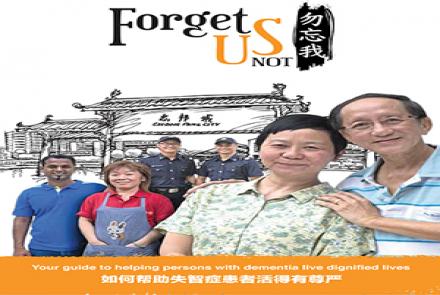
    PatientsEngage is happy to support 'Forget Us Not', a joint initiative by Lien Foundation and Khoo Teck Puat Hospital. They have put together this guide in English and Mandarin to help persons with dementia live dignified lives. This is part of the plan to build Dementia-Friendly Communities in Singapore. The 'Forget Us Not' initiative will foster a kampong spirit where we come together to help one another. The information and tools in this guide is only a first step. If you would like to do…
  • The Tough and Tender Caregiver
    Many caregivers feel guilty and think it is wrong to get tough with their loved ones, even if the intention is to help in the long run. Maya Ramachandran delves into the dilemma with a personal account. As caregivers, we are concerned about the health of our loved one. We assist with the care of/take care of our loved one, in the midst of many other responsibilities that we are required to fulfil. Sometimes, the patient is uncooperative or simply stubborn to a point of no return. What do we do…
  • Music Therapy in Dementia: How Effective is it?
    A look at how music tends to make life so much better for those suffering from dementia “Music has power for individuals with all types of dementias and it can spark convincing outcomes at any stage of the disease when used appropriately. For example, the type/choice or duration of music at each stage of the disease has to be taken into account”, says Nilanjana Maulik, Secretary General of ARDSI (Alzheimer’s and Related Disorders Society of India), Kolkata. Most people enjoy music, but can it…
  • I never wanted my mother to go into a dementia care home
    Carol D’Souza, a consulting psychologist, recounts her mother’s advancing dementia and how she and her family made peace with the agonizing decision to put her in a care home. Putting my mother in a Home was one of the most difficult decisions made by my family and me. Onset of dementia seemed so sudden for her; it started with bizarre behavior of her staying awake all night – worrying about all sorts of things she absolutely did not need to.  Her life had turned into a…
  • Palliative care in Kerala - lessons and answers
    With a palliative care policy formulated in 2008, Kerala has become a path-breaker and a model for the rest of the country. Professor Devi Vijay of IIM Calcutta provides some insights into this community-based aspect of health care.  1. What can the rest of the country learn from the success of the Kerala palliative care story?How can other countries and communities leverage this community-based model?  There are several elements of the Kerala palliative care movement worth examining…
  • It is important to talk to people with dementia
    Talk to your loved one with dementia; talk to others in your shoes, says Melissa Chan, founder of Project We Forgot, which supports caregivers of patients with Alzheimer’s and dementia. Please share your encounter with Alzheimer’s Disease.  I was about 14 when my dad was diagnosed at age 53. Initially, we were confused because his family had no history of the disease but later the doctors pinned it down to the late-onset of effects caused by a car accident he had…
  • Dementia caregiving challenges and solutions
    Families often find themselves at wit’s end looking after a loved one with dementia. Porrselvi A.P., a cognitive and psychosocial interventions specialist, offers a case study that shows that caregiving challenges can be overcome with the right strategies.  We received a call from a very disturbed Mr. K, who was trying to find a dementia care home for his aged father, Mr. S., aged 73. Mr. K was distressed because he had never thought there would come a day when he would have to seek…
  • Image description: Black and white image shows an elderly persons hands on a lap
    Coping with Disasters and Dementia
    Disasters such as floods have an even worse impact on people with dementia. Dr Sridhar Vaitheswaran explains what precautions and coping measures can be taken A disaster is defined as an unexpected event that kills a lot of people or causes a lot of damage (Oxford Advanced Learner’s Dictionary). During a disaster, routine life is affected to a significant extent. Individual lives are under threat and the immediate focus is on protecting lives. The capacity of organisations that generally manage…
  • A person in a blue full sleeved shirt holding his head indicating a brain stroke
    Post-Stroke Depression Is Common
    But often overlooked, says Porrselvi A.P. a cognitive and psychosocial interventions specialist. Here, she offers a case study and practical strategies to guide you back to normal life.   The patient: Mrs. K, a 67-year-old woman had a stroke in the left side of her brain in September last year.  Her condition: Mrs K was referred for cognitive and psychological evaluation following complaints of social withdrawal, memory disturbances and increased irritability…
  • Living well with Dementia in Hindi
    A excellent video in Hindi from the UK.  Covers the following aspects: What is Dementia Types of Dementia - Alzheimer's, Vascular Dementia, Lewy Body, etc.. Difference between Dementia and Ageing Medication and treatment  Management of Dementia Importance of a support network so you realise you are not alone Advise to caregivers and carers: Share your worries and concerns with friends and family members Join support groups Involve the family, even children Use care services whenever…