
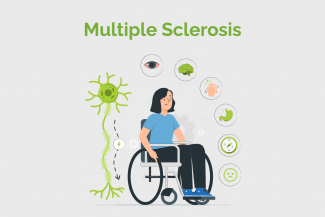
  • Multiple Sclerosis
    Multiple sclerosis or MS is a disease of the central nervous system (brain and spinal cord). It is an inflammatory disease in which the insulating covers of nerve cells in the brain and spinal cord become damaged.
Submitted by PatientsEngage on 28 September 2015
Multiple Sclerosis Treatment

There is no known cure for multiple sclerosis, but several therapies have proven helpful in relieving the symptoms and improving the quality of life. The aims of therapy are to manage the acute condition or attack, returning to function after an attack, preventing new attacks, and preventing disability.

Medication

Any individual who experiences an acute episode (including optic neuritis) sufficient to cause distressing symptoms or an increased limitation on activities independent of whether it is a first presentation or subsequent relapse, should be offered a course of high-dose systemic corticosteroids (these have anti-inflammatory and immune suppressive properties). The course should be started as soon as possible after symptoms appear and should not be taken for more than 3 weeks.

Long-term treatment with systemic corticosteroids is not advisable because of adverse effects like central obesity, cutaneous atrophy, easy bruising, muscle wasting, osteoporosis, hypertension, diabetes mellitus, immunosuppression and psychiatric symptoms. So as an alternative, other immunosuppressants have been tried. Azathioprine is probably the safest drug in this category and has reduced the number of relapses in patients under this drug compared to those under a placebo.

Administration of methotrexate appears to be the best therapy for slowing deterioration in patients with chronic progressive MS.

• The use of interferon-γ-1b and -1a has shown to reduce clinical attacks. When the attacks do occur, they are shorter and less severe. It also slowed the progression of physical disability. Mitoxantrone, an anti-cancer drug, was also found to be effective. It acts by weakening the immune system and thereby decreases the symptoms of MS. Natalizumab and fingolimod are immunomodulatory drugs which are found to be effective and are labelled as disease modifying drugs. 

If psychological symptoms of depression are evident, anti-depressant medications may be helpful.

Non-pharmocologic measures 

Therapies such as total lymphoid irradiation (which limits the production of white blood cells), plasmapheresis (plasma exchange) and immunoglobulin therapy have shown to have marginal benefit.


Changed
19/Jun/2025
Condition

Stories

  • A woman doing yoga and overlay text says Staying Healthy and Productive with Multiple Sclerosis
    Healthy and Productive After 17 years of Multiple Sclerosis
    Shefali*, 55 from Mumbai has lived with Relapsing-Remitting Multiple Sclerosis for 17 years. She shares her journey from diagnosis of MS to treatment and management, how she re-learnt basic skills in order to function effectively. Please tell us a bit about your condition. Can you describe it? I am a person living with Relapsing-Remitting Multiple Sclerosis (RRMS) for the last 17+ years. I was diagnosed in April 2009. I am in good functional condition with a thriving career. I actively…
  • Picture of a woman and the text overly Acceptance is the Hardest with Multiple Sclerosis
    Acceptance Is The Hardest With Multiple Sclerosis
    Anushree Risbood, 41 from Pune was diagnosed with Relapsing Remitting Multiple Sclerosis, and her life has not been the same since. She shares the details of her journey and how it has changed her perspective. Please tell us about your present condition. Can you describe it? I live with Multiple Sclerosis (MS). Currently I am on a wheelchair, facing tremendous imbalance and spasm issues. What were the early symptoms? What made you go to a doctor? There were several issues I was facing before I…
  • woman with MS with a mask covering her face and holding a walker
    Wanted to Get Rid of My Walker But Covid Struck
    Sapna Punjabi, who has Multiple Sclerosis, has been deeply affected by the long Covid lockdown. Her limbs have become weak and stiff in the absence of physiotherapy leaving her a dependent again. Here she prays for an end to the pandemic so that she can reconstruct her dream and rebuild her confidence. 2015 is where my MS story begins. I was diagnosed with Multiple Sclerosis (MS) in March 2015. Multiple Sclerosis is a disease in which the immune system eats away at the protective covering of…
  • I Wish Multiple Sclerosis Had Not Made Me So Dependent
    Kavita Pawaskar, 38 had her first symptoms of Multiple Sclerosis when she was 10. She shares the effects of this condition and the impact the increasing disability has on activities of daily living.  #DayInTheLifeSeries In 1992, when I was 10 years old, I was going to school one morning for my exam. While I was writing my exam paper, suddenly my arms stopped working and I just could not continue. The next day, I had my second paper. I sat down in the classroom and the next moment,…
  • Sapna a MS Warrior
    My Roller Coaster Ride With Multiple Sclerosis
    Four years ago, at age 40, Sapna Punjabi was diagnosed with Multiple Sclerosis. Though life changed in many ways due to growing disabilities, it could not quash her spirit. Read her courageous account. Ever since my childhood, I have been very bold, easygoing, bubbly and confident. After I completed my studies, I joined HCL Technologies. I was overwhelmed to join an Indian multinational IT firm. HCL not only added to my list of friends but also found me my soul mate. Over the years, I decided…
  • There Is Hope For Multiple Sclerosis Patients
    Today, with excellent diagnosis and medicines, Multiple Sclerosis patients can lead an almost normal life, was the message upheld by all participating neurologists and MSSI at a recent medical seminar. There was optimism that rang through at the Multiple Sclerosis medical seminar held at the Kokilaben Dhirubhai Ambani Hospital recently. All the speakers emphasised on how there has been a paradigm shift for the better in diagnosis, treatment and overall management of multiple sclerosis (MS) in…
  • 12 Ways Of Improving Quality of Life for Persons with Multiple Sclerosis
    Persons with Multiple Sclerosis (MS) have poorer quality of life due to a variety of issues. Dr. Shital Raval, with inputs from Sheela Chitnis, Founder MSSI, shares twelve ways to improve quality of life by avoiding triggers and managing symptoms effectively.  A study once found that patients with Multiple Sclerosis (MS) had poorer quality of life (QoL) than other persons with disability and that was due to issues such as fatigue, unemployment, and mobility limitations. Zwibel et al…
  • Stock pic of a grey haired man in a light shirt over a white undershirt pressing down his eyes in pain with his specs pushed onto his forehead
    Overcoming The Most Common Symptoms of Multiple Sclerosis
    The focus for World MS Day 2019 is to raise awareness of the invisible symptoms of Multiple Sclerosis (MS) and the unseen impact of MS on quality of life. We asked our MS contributors about the symptoms that most affect their daily living. And their advice to other MS patients. Arvind Sanghvi , who lives in Pune, was diagnosed with Multiple Sclerosis at 30. Since then, he has been diligently practising Yoga to control the many complications of MS. Smitha Sadasivan is a Chennai based Disability…
  • My Multiple Sclerosis Has Made Me A Better Human Being
    Mrs Jyoti Ronghe, 57 of Pune has been battling the crippling Multiple Sclerosis condition for more than 2 decades now. She talks of the challenges of tackling such a condition. Please tell us a bit about your condition, as in what you are suffering from I am suffering from Secondary Progressive Multiple Sclerosis since 1998. I am a Mumbai girl. I moved to Pune after my marriage. My father-in-law being a doctor, I was taken to some doctors known to him after I was diagnosed with MS. My parents…
  • Tips for Balancing While Walking and Standing
    Persons with Multiple Sclerosis are often more likely to lose balance. MSSI Chennai explains the reasons why.  And six exercises that can help a person with MS improve balance.  Persons with Multiple Sclerosis who have numbness in legs/ feet may feel less than sure footed when walking or climbing stairs. This may cause them to lean forward to watch their feet as they move, and that puts further strain on back and neck. In a good posture, the head is centered above spine and chin is…