• A woman doing yoga and overlay text says Staying Healthy and Productive with Multiple Sclerosis
    Healthy and Productive After 17 years of Multiple Sclerosis
    Shefali*, 55 from Mumbai has lived with Relapsing-Remitting Multiple Sclerosis for 17 years. She shares her journey from diagnosis of MS to treatment and management, how she re-learnt basic skills in order to function effectively. Please tell us a bit about your condition. Can you describe it? I am a person living with Relapsing-Remitting Multiple Sclerosis (RRMS) for the last 17+ years. I was diagnosed in April 2009. I am in good functional condition with a thriving career. I actively…
  • Picture of a woman and the text overly Acceptance is the Hardest with Multiple Sclerosis
    Acceptance Is The Hardest With Multiple Sclerosis
    Anushree Risbood, 41 from Pune was diagnosed with Relapsing Remitting Multiple Sclerosis, and her life has not been the same since. She shares the details of her journey and how it has changed her perspective. Please tell us about your present condition. Can you describe it? I live with Multiple Sclerosis (MS). Currently I am on a wheelchair, facing tremendous imbalance and spasm issues. What were the early symptoms? What made you go to a doctor? There were several issues I was facing before I…
  • Picture of Deepesh, a young man in a pink tshirt biting a medal and text overlay I wish I had accepted Epilepsy Sooner
    I Wish I Had Accepted Epilepsy Sooner
    Deepesh Palkar, 26 from Mumbai has struggled not only with Epilepsy, but the stigma attached to it, since childhood. He shares his journey to acceptance with us. Please tell us about your present condition. Can you describe it? I have undergone Epilepsy surgery in April 2021 and I’m currently seizure free with no ongoing anti-seizure medications. My life and career certainly changed after the Right Anterior Temporal Lobectomy surgery for epilepsy. What were the early symptoms? What made you go…
  • Stock pic of a young woman fainting and the text overlay When to take fainting seriously
    When Should You Take Fainting Seriously
    Unconsciousness or fainting is an occurrence that we are all familiar with. It is usually a symptom of an underlying medical issue. Here the PatientsEngage team helps you understand the many causes of fainting and when to see a doctor. Unconsciousness is like a switch turning off, and most people know this as something far more familiar called fainting. When someone faints, the brain temporarily receives less blood than it needs, leading to a brief loss of awareness to their surroundings.…
  • Three Pictures of people with friends and the title with friends like these no one has to walk this journey alone. Happy friendship day
    With Friends Like These No One Has To Walk This Journey Alone
    Friendship does not mean sharing good times only. When friends are with you during your worst phase, helping you to stand up, all the time directing you to take the right decisions, it takes on a different meaning. On this Friendship Day, three people with different health conditions share the huge support they have always received from their friends. Akanksha Patankar Mirji, Epilepsy Warrior How have friends played a role in your lives? Within the community? Or outside? Importance of their…
  • Brain Tumor Prevention
    Prevention of Brain Tumour
    Prevention of Brain Tumours: We cannot prevent brain tumours/cancer, but we can reduce our risk of having them. Like any other cancer, brain cancer risk can also be reduced by: Avoid/Limit your exposure to Harmful Substances The toxins in our environment and pollutants can have unfavourable effects on the brain. Pesticides, industrial chemicals, and air and water pollutants, and even indoor pollutants are known to contribute to the development of brain tumours as per the scientific literature.…
  • Brain Tumor Management
    Management of Brain Tumour
    Management of Brain Tumour Role of palliative care: Palliative care helps in improving the quality of life of not just the patient but the families and caregivers of patients with cancer. It has many roles: Symptom Management: Palliative care helps to mitigate and manage many symptoms due to cancer and the related treatment like pain, nausea, fatigue, loss of appetite, and breathlessness. It combines several modalities like use of medications, physiotherapy, counselling etc. Emotional and…
  • Brain Tumor Treatments
    Treatment of Brain Tumour and Brain Cancers
    Treatment for brain tumour and brain cancer: The treatment plan is usually decided based on the physical assessment of the patient, age, advice of the Neuro-oncologist (specialist for brain cancer) and the oncology team or Neurosurgeon (if the brain tumour is benign) and is usually based on factors like: Type of Tumour: Depends on whether the tumour is cancerous or benign, and the specific type of tumour. Grade of tumour: Tumours may range from low-grade to high-grade and the…
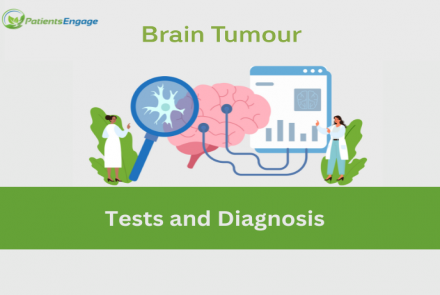
  • Brain Tumor Tests Diagnosis
    Tests and Diagnosis of Brain Tumour
    Brain Tumour Diagnosis Process : Initially the doctor (typically a neurologist) will take a detailed history to understand the duration and intensity of the symptoms. They may inquire about past and current health issues, current and past medications, surgical and family history etc. This will be followed by a general physical exam and a neurological examination (neurocognitive and neuro-ophthalmological) to check for: Balance and coordination. Mental status/Awareness/Ability to follow simple…
  • Brain Tumor Types and Grades
    Types and Grading of Brain Tumour
    Types of Brain Tumour: Primary and Secondary Malignant and Benign Primary and Secondary Tumours that start in the brain tissue itself are known as primary brain tumours. Primary tumours are further categorized by clinicians as glial (composed of glial cells in the brain) or non-glial (developed on the brain or the structures of the brain like nerves, blood vessels, and glands). If the tumour has started elsewhere in the body and then spread to the brain; it is termed as secondary brain…
Query received: My father had a brain fits on 16th July. we hospitalized him immediately. then he had brain stroke. after he became little stable by medications. we got him discharged. at home suffered from pneumonia & again he got…
I have Parkinson's disease for last 4 years. I was  on Syndopa Plus(4 times) and and pramipexole (0.25 4 times) for long. But Off late I am  finding medication less effective with  pain, muscle rigidity and body heaviness unbearable.…
Why faced vertigo during laying down or up right moving. Remedy for it?
A case in Singapore is a good reminder of how details of "herbal" supplements should also be shared with your surgeon. In this case, it appears to have had fatal impact.  https://www.straitstimes.com/singapore/courts-crime/cordyceps-likely-led-…
I am prone to headaches. Heat, stress, tiredness can set it off. How do I know if it is just a headache or migraine? And can I do anything to get relief other than taking painkillers?
Do you know anyone with Parkinson's? L-DOPA (Living with Dignity fOr People with pArkinson's) is an initiative which works to raise awareness and support people with Parkinson's and their caregivers. L-DOPA will help people with Parkinson's receive…
You want your elderly parent to be independent. But what if they are getting absent minded and you fear they may get lost. I have heard that people with Alzheimers or dementia sometimes wander out of the house, even at night. Is that true? What can…
http://www.upworthy.com/the-last-ice-bucket-challenge-you-need-to-see-a…
No content found

Latest Communities

  • Neurological Conditions
    Parkinson's Disease, Multiple Sclerosis, Stroke Rehabilitation, Migraine Content for Dementia and…
  • Neurological Conditions
    Parkinson's Disease, Multiple Sclerosis, Stroke Rehabilitation, Migraine Content for Dementia and…
  • Cancer
    This Community will address questions and discussions on all forms of Cancer. We will support each other - patients and…